



Liquid Gold
From Farms across Georgia, a new frontier of olive oil emerges.
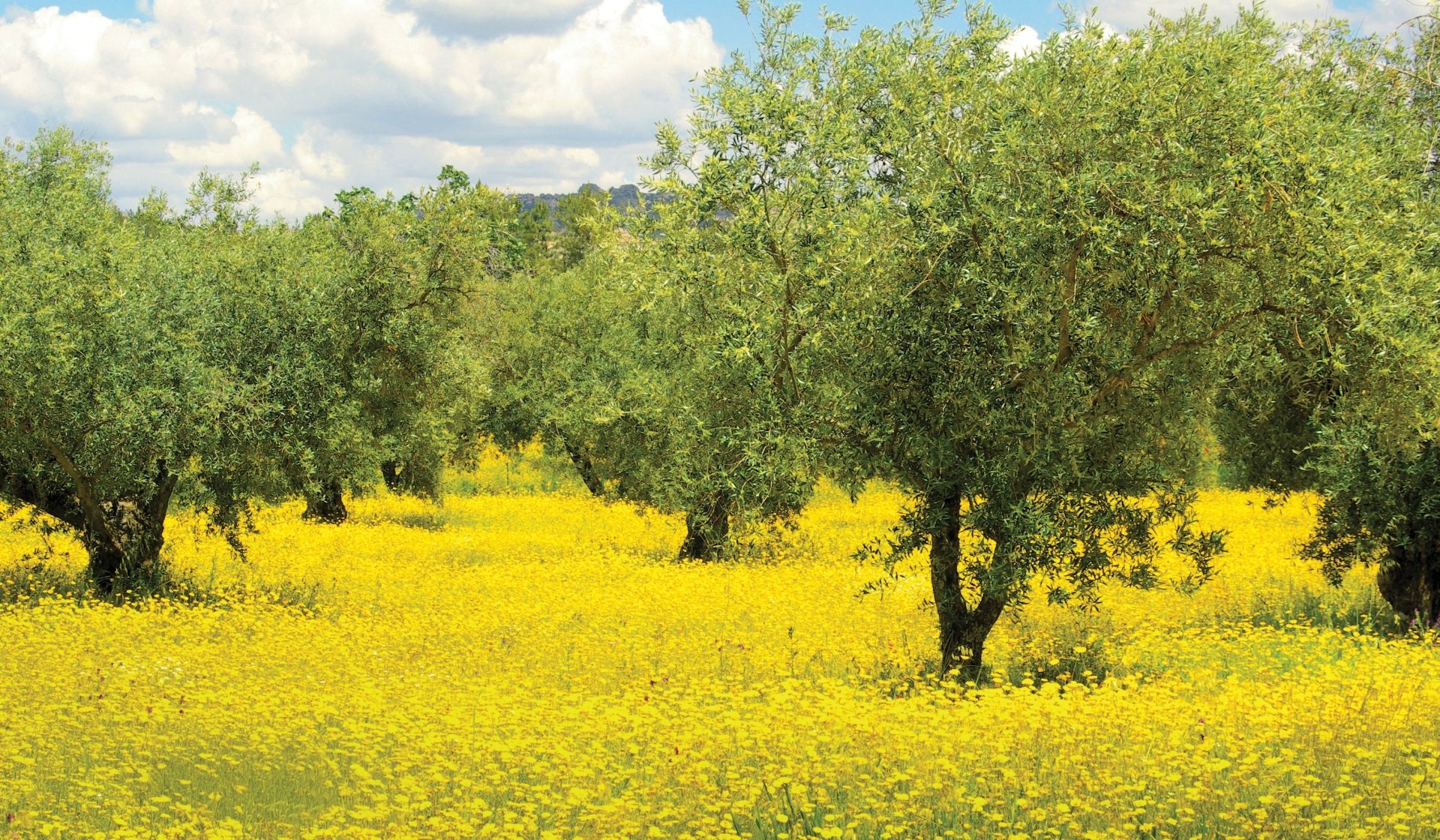
Envision strolling through an olive grove, where silver-green leaves rustle gently in the breeze and catch the sunlight. Such a scene could easily evoke the rolling hills of Tuscany or the sun-drenched coasts of Greece. However, this pastoral image has just as readily unfolded in southern Georgia. What was once considered the exclusive domain of Mediterranean countries like Italy, Spain and Greece, olive oil production is establishing roots in the American South.
Handpicking Olives
The most compelling reason for Georgia’s suitability lies in its remarkable resemblance in temperature patterns and seasonal stability to traditional olive-growing regions, such as Turkey and Jordan. This consistent climate is crucial for the healthy and continuous growth of olive trees, minimizing the risk of crop loss due to sudden weather shifts. Olive trees thrive in Georgia’s warm, subtropical climate, combined with its distinct seasons, which provide just the right balance.
This industry is quietly transforming the agricultural landscape, with Georgia positioning itself as a promising new region for boutique olive oil production. This development suggests intriguing possibilities for the area’s culinary scene.
FROM THE MEDITERRANEAN TO THE SOUTH
While olive cultivation in Georgia might seem like a new trend, it’s a revival. Driven by his admiration for olives and olive oil during his time in France, Thomas Jefferson orchestrated the shipment of 500 olive trees to Georgia and South Carolina, arriving in Charleston by 1791. While some accounts suggest earlier plantings, this initiative significantly bolstered olive cultivation efforts.
“The trees flourished and were a common sight in the state until the 1860s,” says Carol Drew of Georgia Olive Farms. “That isn’t as well known because olives weren’t as in demand as other crops.” The fact that olives flourished almost 200 years ago suggests a deep-rooted compatibility between the land and the olive.
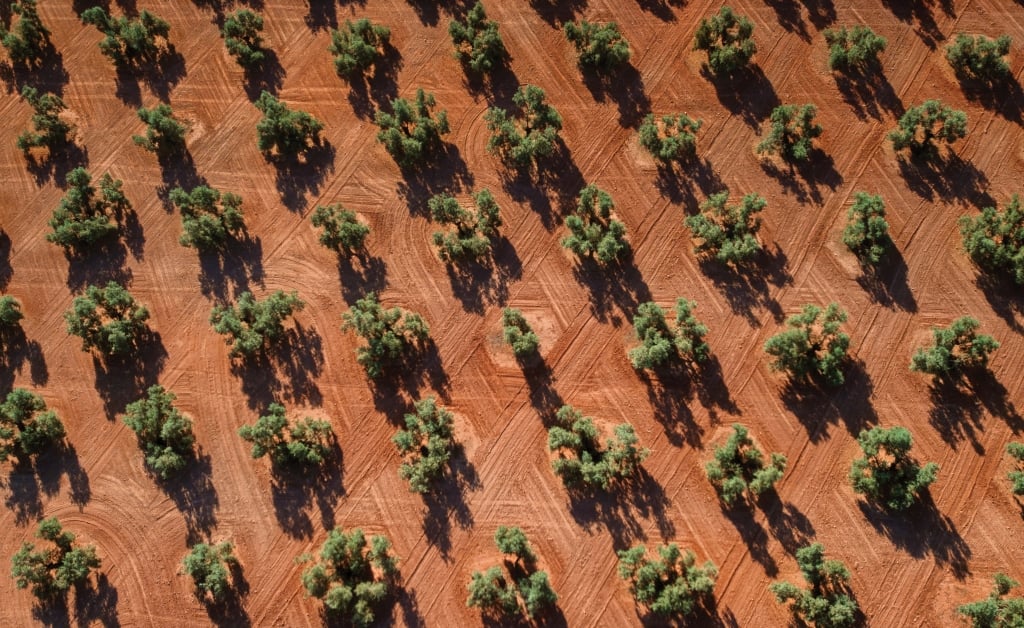
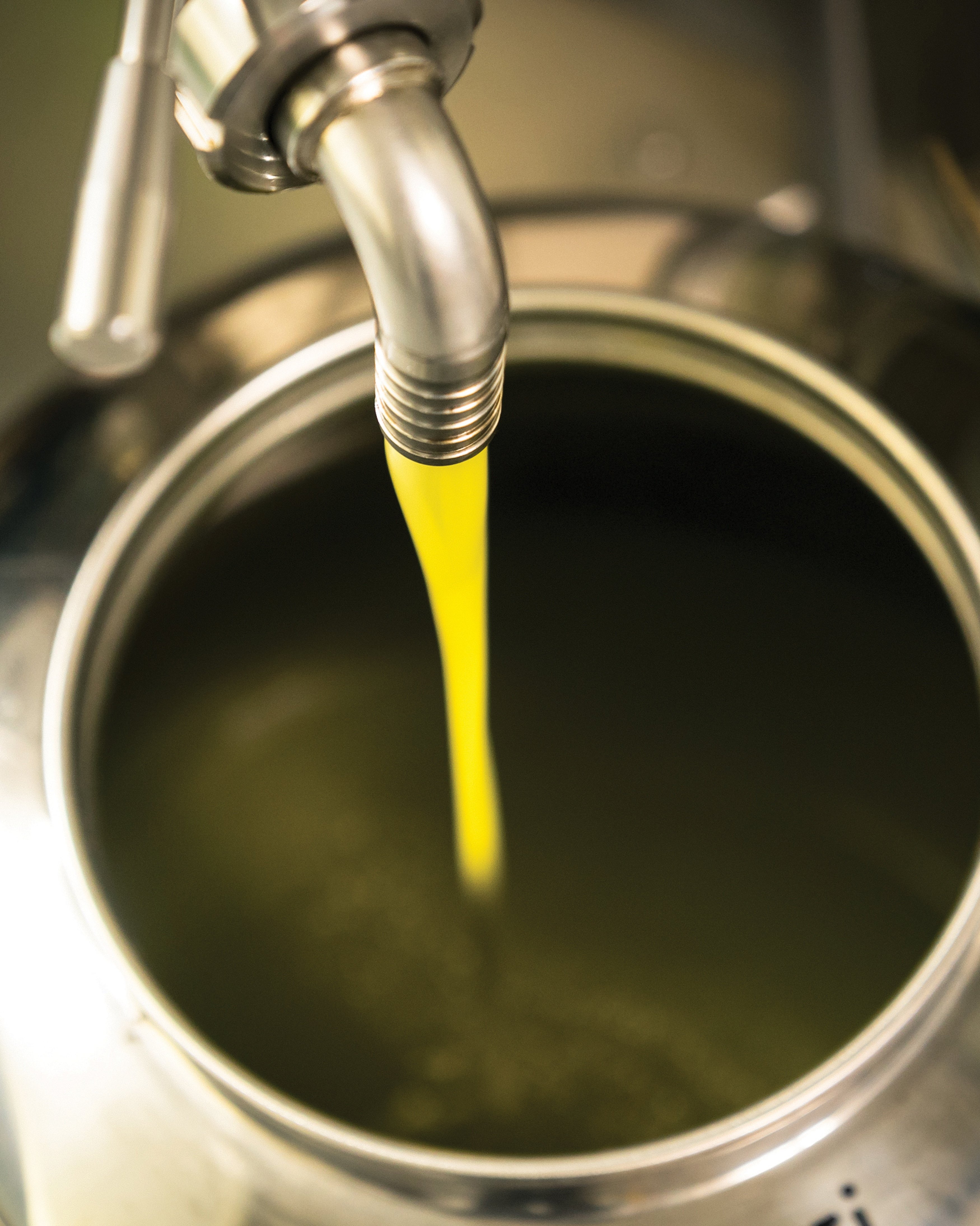
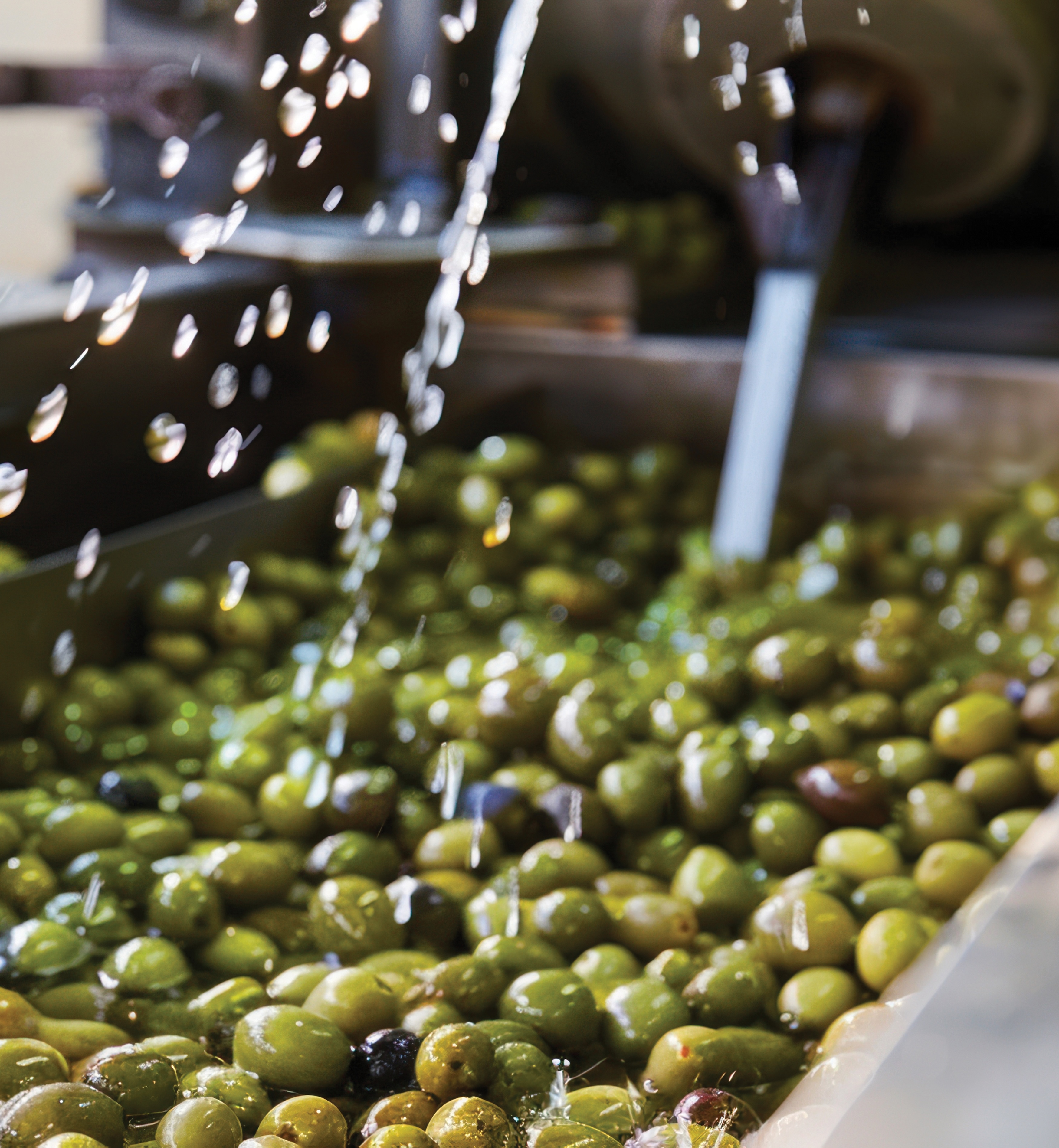
Georgia Olive Farms, which was founded in 2009, sits on 55 acres in Lanier County. It is here that they grow, harvest, mill, process and bottle their olive oil. For one, the farm can maintain control over its product, but they are also able to label it with a key name — extra virgin olive oil. To be considered extra virgin olive oil, olives have to be picked and processed within 24 hours. “What we pick that day, we actually have to turn into olive oil that day,” says Drew. “From the time we dump the harvested olives to the time we are producing olive oil is about an hour and a half.”
Tracy and Curtis Poling are the growers behind Woodpecker Trail Olive Farm in Glennville, Georgia. The land has been in Tracy’s family since 1854, but the olive oil business is a fledgling one. Due to their location near the Georgia coast, the Polings’ sandy soil is particularly beneficial for olive cultivation. This composition allows for excellent drainage, a vital characteristic for olive trees as they thrive in well-drained conditions, preventing root damage from excessive moisture.
Olive Farm
A BOUTIQUE BUSINESS: HARVESTING AND CRAFTSMANSHIP
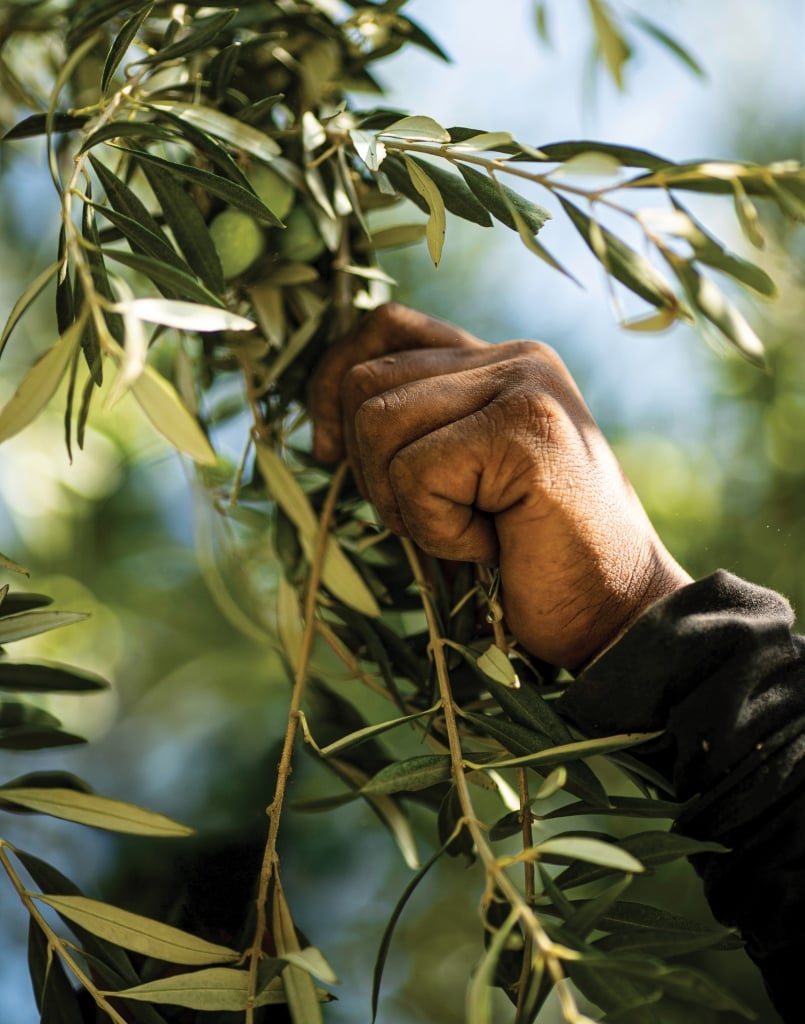
Boutique olive oil producers prioritize meticulous attention to detail throughout their process, distinguishing their products through superior quality rather than mass production. Unlike larger operations, these smaller farms often favor specific harvesting methods. For Woodpecker Trail Olive Farm, that means hand-harvesting.
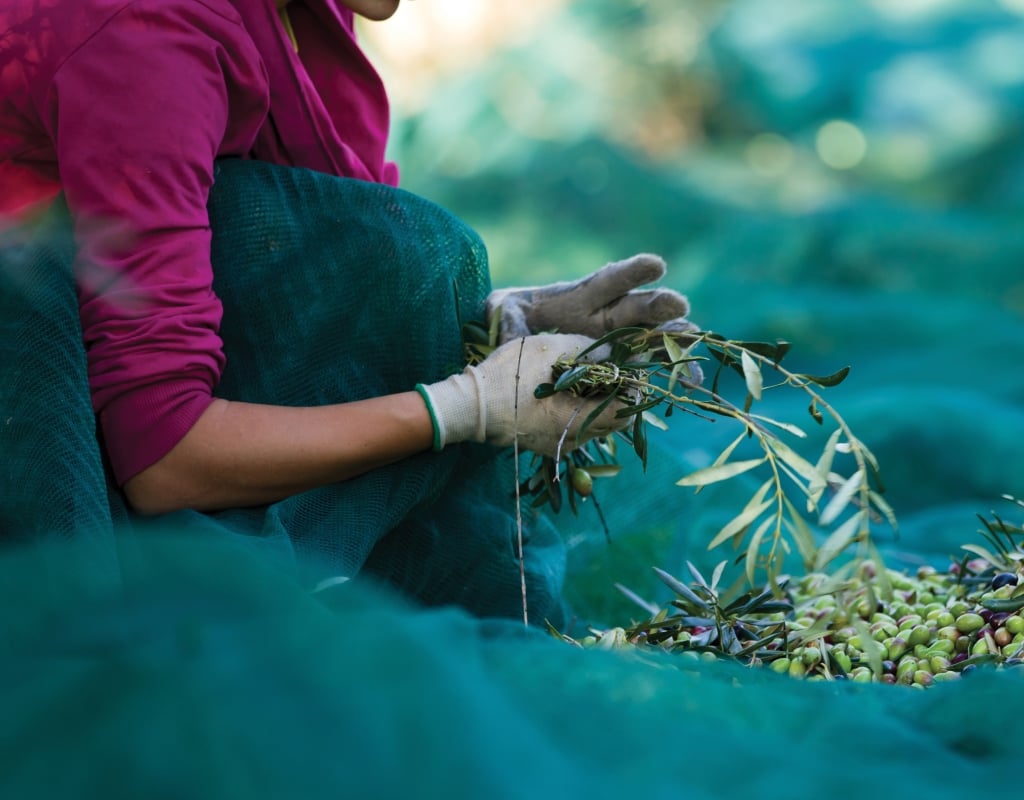
“We harvest the olives, put them immediately into a refrigerated truck and then take that truck to the mill. We bring it back to the farm in containers. Then Curtis and I bottle throughout the year as needed,” explains Poling.
The careful approach is gentler on the trees and, as some producers attest, significantly contributes to higher levels of beneficial compounds like polyphenols, which offer substantial health advantages. This focus on traditional but labor-intensive practice ensures that the olives are handled delicately and processed swiftly, often within hours of being picked.
This rapid turnaround, coupled with careful storage in dark, airtight containers away from light, oxygen and heat, helps preserve the oil’s freshness, such that the final product rivals — and often surpasses — those found in larger, more commercial markets. That means a tastier product.
Harvest Season
“Our olive oils are fresh pressed, and we rotate them every six months, so they have the highest level of antioxidants. Olive oil will last in your pantry for a couple of years, but the longer it sits, the more it loses its antioxidant levels,” explains Olive Oil Sommelier and Owner of Golden Isles Olive Oil on Saint Simons Island, Donna MacPherson. “Store it in a dark bottle in your pantry away from your stove or any windows.”
Georgia-grown olives are best suited for pressing. Georgia Olive Farm grows three main varieties of olives, each one creating a specific flavor profile or blend. Each olive has a different attribute that contributes to the flavor. Arbequina, for example, is known for its nutty sweetness. Arbosana is considered to be balanced and fruity, and Koroneiki is robust and peppery.
“Our chef’s blend is a combination of all three olives, so it’s a little bit smoother when you’re tasting it, but it has a peppery finish,” says Drew.
Woodpecker Trail Olive Farm opts to grow a dozen varieties. “I’ve been experimenting with Tunisian and Italian trees and trees from Greece and so forth,” says Curtis. “I’m trying to grow one more tree from France right now, but it’s too early to say just yet. Call me after five years, I’ll let you know!”

BEYOND THE BOTTLE
Olive Oil is the gift that keeps on giving. In particular, “Georgia-grown extra virgin olive oil has a unique and truly fresh character unlike any other in the world,” says Ciriaco Chavez, Olive Oil Cultivator at Fresh Press Farms in Iron City, Georgia. The California native spent his life dedicated to agriculture and the olive industry, having even co-authored the state’s olive production manual. Upon arriving to Georgia, he has taken part in establishing the cold-pressed extra virgin olive oil industry in the region. Chavez details that, “After a decade in this industry, I feel fortunate to work at Fresh Press Farms, where we get to be true makers. For us, every bottle represents not just an oil but a commitment to quality, health and sustainability.”
At the heart of Fresh Press Farms is golden olive oil, but how they store their olive oil is just as remarkable. Their proprietary aluminum olive oil bottles are the key to their product’s sustainability and longevity. Each bottle completely blocks oxidation, while also being 100% recyclable, ultimately reducing carbon footprint and ensuring long-lasting freshness.
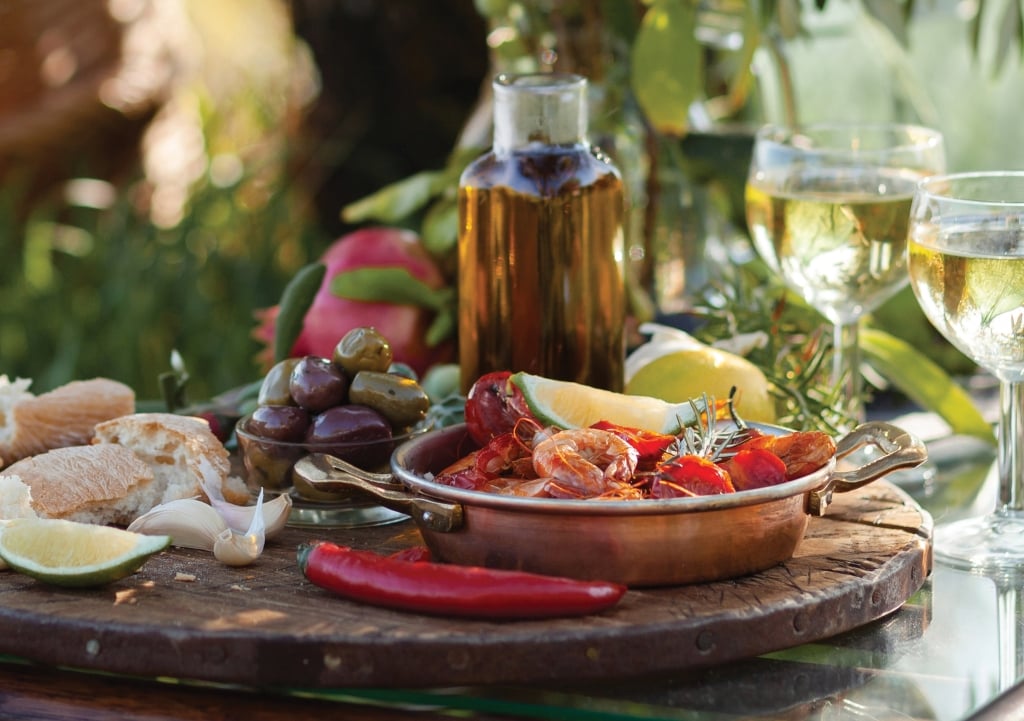
A coastal spread featuring fresh seafood and olive oil.
The cold-pressed process allows for the oil to retain the polyphenols and healthy fats found in its raw and natural form. Through reinfusion techniques, their Pure Gold extra virgin olive oil contains twice the amount of polyphenols of typical extra virgin olive oils. Differences in harvesting times can also vary the flavor and polyphenol count in olive oil; later harvests display milder flavors versus earlier harvests that burst with bold flavors.
Extra virgin olive oil is a well-known natural skin and hair moisturizer. As a universal household item, it can be used in a variety of ways, from making artisanal soaps to cleaning sticky hands after family craft time. “At our house,” Chavez details, “when we’re feeling adventurous, we’ll drizzle extra virgin olive oil over vanilla ice cream with a sprinkle of sea salt.” The fruity profiles mixed with the creamy sweetness add an unexpected, but delightful twist.
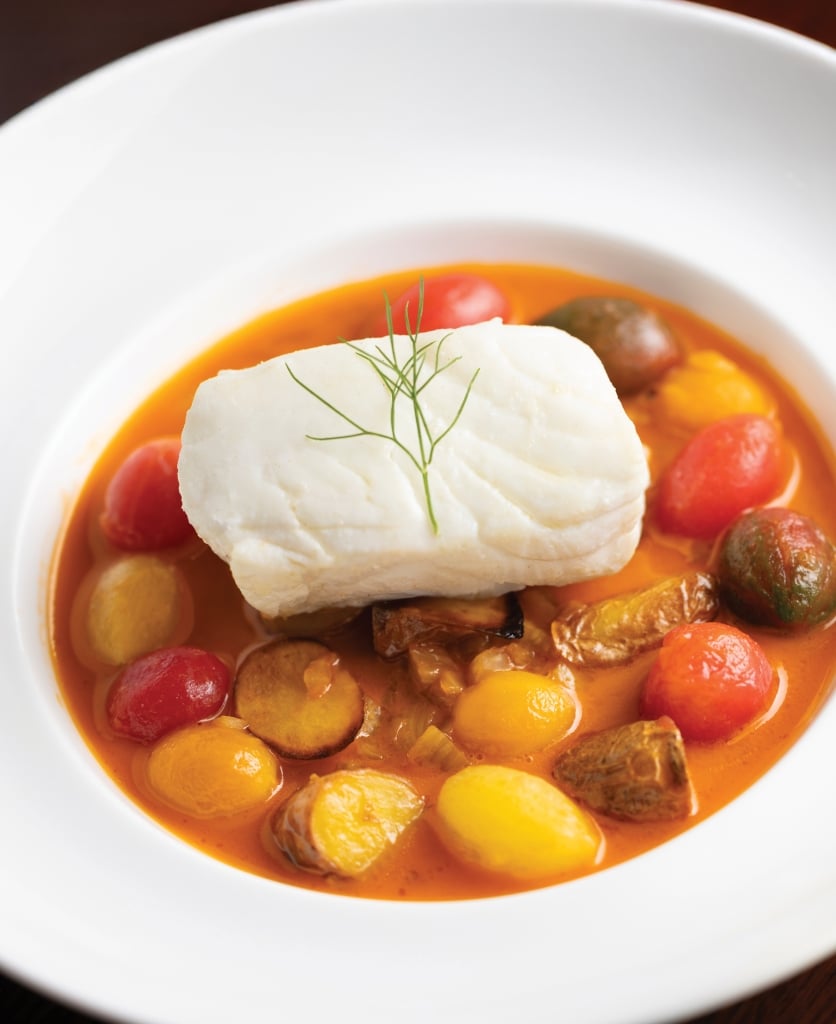
Olive Oil-Poached Halibut
(Halibut Poached in Georgia Olive Oil, over Confit and Roasted Vegetables in a rich Bouillabaisse)
Prep Time: 35 mins
Cook Time: 1 hour 30 mins
Yields: 4 servings
POACHED HALIBUT
- 4 skinless halibut filets, 6 ounces each
- 4 cups Georgia Olive Oil
- salt and pepper, to taste
CONFIT AND ROASTED VEGETABLES
- 12 ounces fingerling potatoes
- 8 ounces cherry tomatoes
- 0.5 fennel bulb, diced to 0.5 inches
- 2 cups canola oil
- 2 tablespoons Georgia Olive Oil
- salt and pepper, to taste
- ice bath, for shocking
BOUILLABAISSE
- 8 ounces onions, sliced
- 0.5 fennel bulb, sliced
- 0.5 ounces garlic
- 0.25 ounces thyme sprigs
- 8 ounces Roma tomatoes, chopped
- 1 cup white wine
- 1 quart fish stock
- 1 quart lobster stock
- 8 ounces unsalted butter
- 2 lemons
- fennel leaves, for garnish
FOR THE POACHED HALIBUT
Season the halibut filets with salt. In a deep pan, warm enough Georgia Olive Oil to cover the fish and maintain a temperature of 140-150°F.
Poach the halibut gently for about 10-12 minutes until it reaches an internal temperature of 145°F.
FOR THE CONFIT AND ROASTED VEGETABLES
Heat the canola oil in a small saucepan to 325°F. Add the cherry tomatoes and cook until their skin begins to loosen.
Using a slotted spoon, remove them from the oil and then shock them in the ice bath. Peel, then set them aside. In the same oil, reduce the temperature to 200°F and gently cook the diced fennel until tender, and reserve.
Cut the fingerling potatoes into quarters and toss with 2 tablespoons of olive oil, salt and pepper. Roast the potatoes at 400°F until golden brown and crisp. Mix with the fennel you cooked previously.
FOR THE BOUILLABAISSE
Warm 2 tablespoons of olive oil in a large pot over medium heat and add the onions, sliced fennel, garlic and thyme, and cook until softened.
Stir in the Roma tomatoes and continue cooking until lightly browned. Deglaze with white wine, reduce by half and add the fish and lobster stocks.
Simmer gently for 45 minutes, then strain and reserve about 3 cups of your broth, also known as bouillabaisse. While the fish is cooking, bring the bouillabaisse to a gentle simmer, whisk in the butter and lemon juice and stir until emulsified.
Add the cherry tomatoes and potatoes to the sauce to warm them up.
PLATING
Spoon the vegetables onto each plate and add the bouillabaisse evenly. Carefully place the halibut on top of the vegetables, garnish with fennel leaves and finish with a drizzle of olive oil.
LIQUID GOLD IN THE GOLDEN ISLES
Culinary and wellness experiences at Sea Island are increasingly enriched by the distinctive qualities of olive oil, showcasing its versatility across the resort. “The Low Country Martini,” featuring a Meyer Lemon Oil-Washed Tanqueray Ten Gin, highlights the oil’s ability to infuse sophisticated, regionally inspired cocktails.
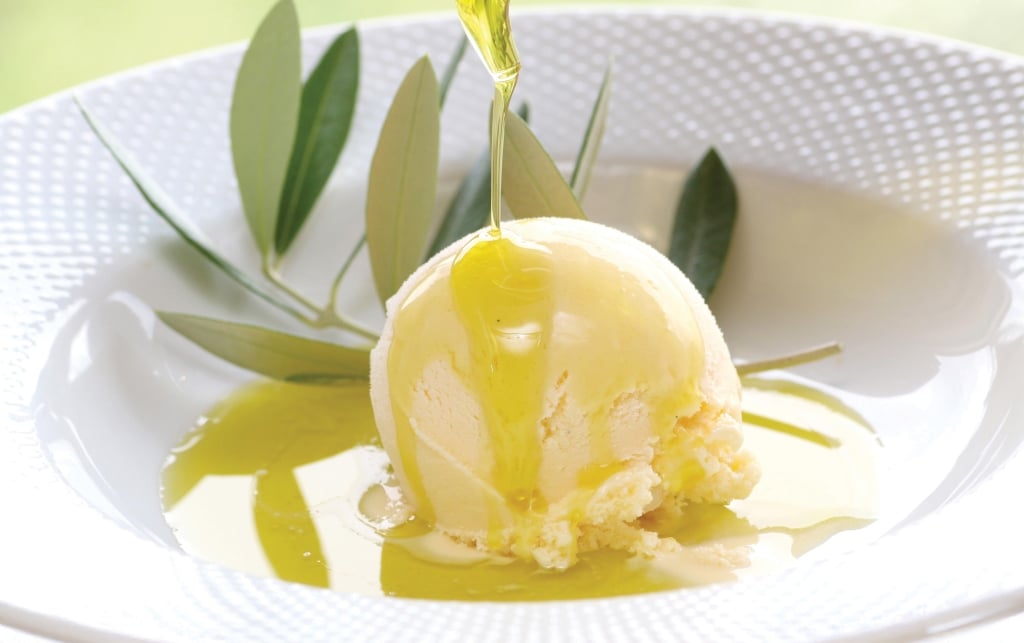
Vanilla ice cream drizzled with lemon basil–infused olive oil.
Sea Island Chef Aldo Hernandez has creatively incorporated olive oil in dishes such as an exquisite olive oil-poached halibut and olive oil-poached tuna for tartines in River Bar. “I love to poach in olive oil because it is such a gentle way to cook. The oil allows you to cook evenly while keeping your product moist and tender,” he says. Chef Aldo also likes to use olive oil as a conduit for herbs and other profiles. “You can infuse some aromatics in the olive oil, and all the flavors will be transferred to the dish.”
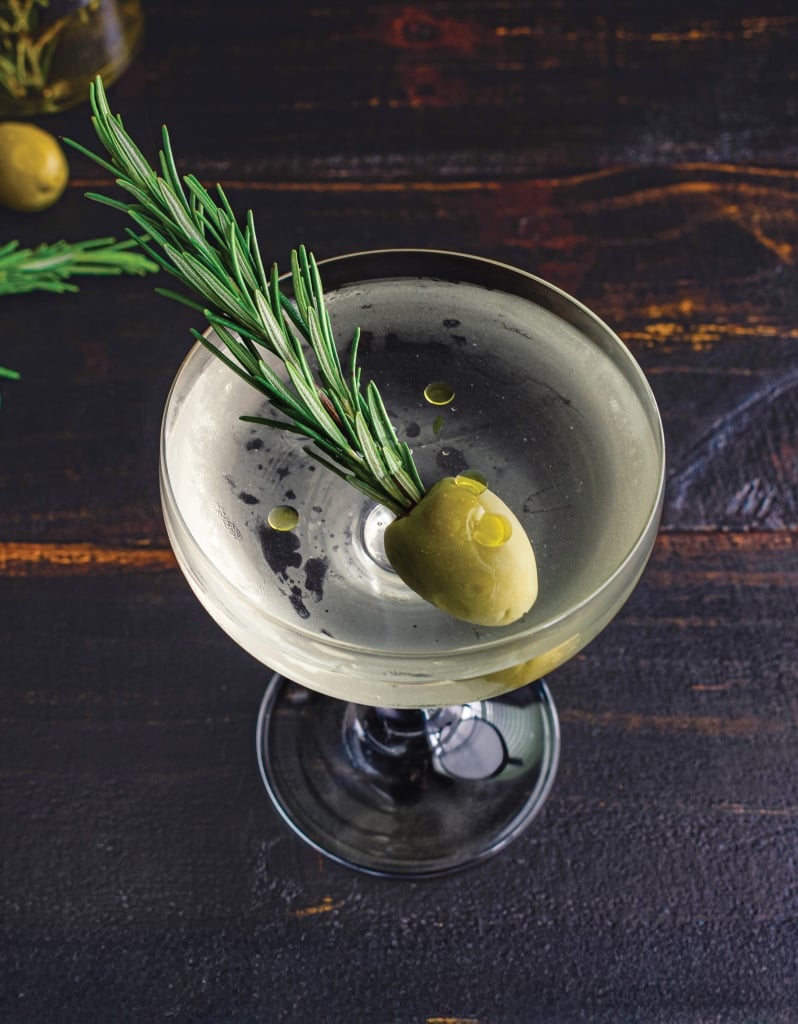
Rosemary Olive Oil Dirty Martini
From the revival of historic groves to the meticulous craft of boutique producers, Georgia’s emergent olive oil industry is a testament to innovation aligning with nature. With its subtropical climate, ideal sandy soils and the dedication of passionate growers, the state is proving to be a fertile ground for olive oil. This Southern renaissance is not only yielding exceptional culinary oils that are finding their way into sophisticated dishes, but it’s also extending into the beauty space, underscoring the versatile benefits of this ancient fruit.
The careful curation required to bring bold flavors and rich nutrients to homes and kitchens across the world has been a long-standing practice that continues to expand. The perfect climate for growing olive oil is no longer exclusive to the Mediterranean; a new home has been found as olive growers plant their seeds in America’s culturally diverse and continuously expanding south. The familiar mild climate and multifaceted soil have welcomed the growth of many traditional crops, which now include olive trees, a surprising yet suitable match. As Georgia’s olive groves continue to flourish, they point toward a future where the rich flavors and healthy properties of locally produced olive oil become a natural part of the region’s identity, establishing the American South as a vibrant new frontier for this esteemed staple.