



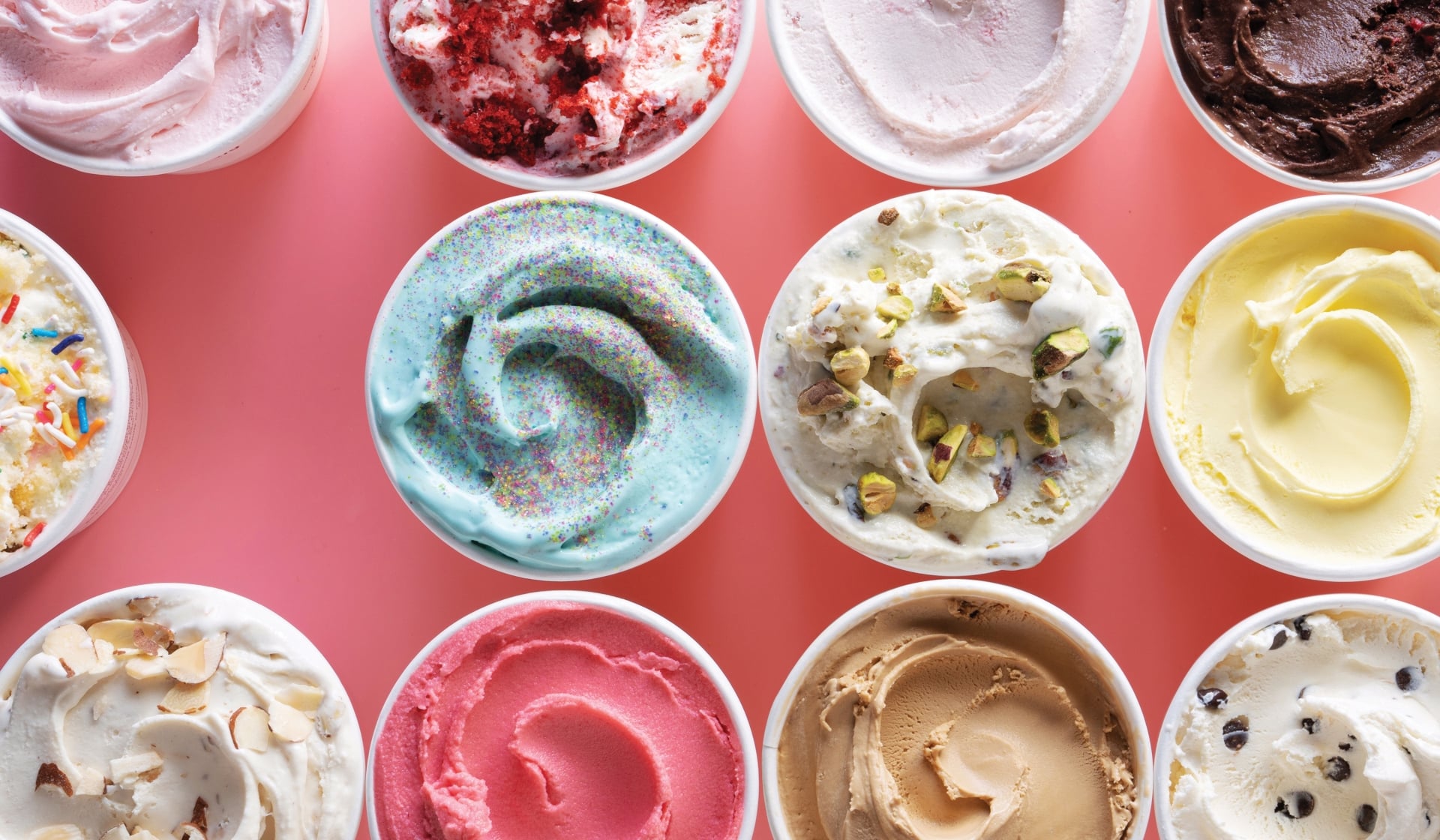
America’s Favorite Dessert
Ushering in a golden age of ice cream while honoring the original.
 Ask any American for a favorite childhood memory, and you can be almost guaranteed to hear a story that involves ice cream. Adam Thomas, Sea Island Culinary Director, remembers going to the nearby diner after baseball in the California town where he grew up for a hot fudge sundae with a maraschino cherry on top.
“Who doesn’t like ice cream?” Thomas muses.
The simple truth is: ice cream makes people happy. It’s not just hyperbole, it’s scientific. Indeed, a recent study by Harvard University found that people who consume ice cream twice a week have healthier hearts than those who don’t consume any at all.
Stratton Leopold, who owns Leopold’s ice cream in Savannah, Georgia, knows this better than anyone. His father, an immigrant from Greece, opened the first Leopold’s with his two brothers in 1919. Today, the brand, which serves classic treats such as cones, sundaes and milkshakes, has a retail presence throughout the Lowcountry. The Broughton Street flagship in downtown Savannah almost always has a line that snakes down the street. “I think humans are predisposed to smile, we are predisposed to feel happy, and ice cream allows us to do that,” Leopold says.
It’s not only classic ice cream shops that realize the appeal of the nostalgic treat. Classically trained and award-winning chefs across the country are also experimenting with the dessert, and in doing so, leaning into the techniques and flavors that have come to define their expertise.
Thomas, for example, says that over the course of his career, he’s experimented with everything from a sourdough baguette to lemongrass and truffle-flavored ice creams, even chocolate molds made from 24-karat gold. Along with some of the best chefs in the country, Thomas is leading a golden age in America’s favorite treat.
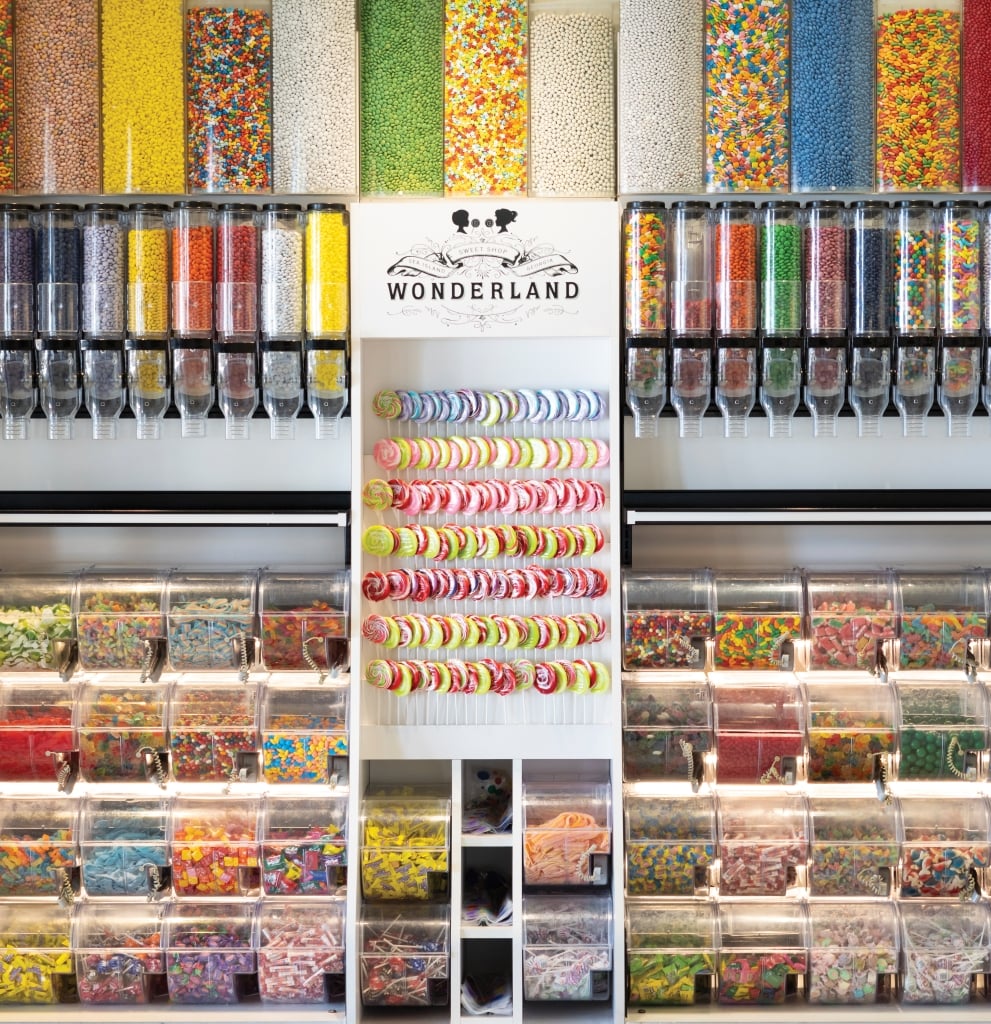
Wonderland at the Beach Club at Sea Island.
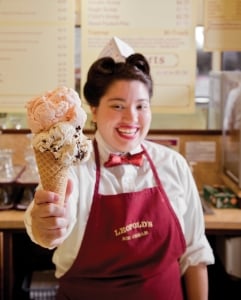
Leopold’s Ice Cream in Savannah, Georgia.
A Distinctly American Dessert
Iced treats have been enjoyed for millennia. Emperors in the Tang Dynasty in China enjoyed frozen treats made from buffalo milk, flour and camphor, and cooled in ice. Alexander the Great delighted in snow and ice flavored with nectar, and the Roman Emperor Nero reputedly sent runners up to the Alps to retrieve snow, which he coated with fresh fruit juice and honey.
Ice cream, which at its base is a frozen treat made from a combination of dairy, sugar and flavorings, first appeared in the New World in the 18th century. Both George Washington, who spent $200, or $7,000 in today’s money, on the treat in the summer of 1790, and Thomas Jefferson, who likely first encountered ice cream during his time spent living in France in the 1780s, were known enthusiasts. Jefferson’s personal recipe for vanilla ice cream is one of 10 written in his own handwriting that survives today. It serves as the inspiration for an ice cream that Chef Adam Thomas and his team have created at Sea Island this year to celebrate the 250th anniversary of the United States.
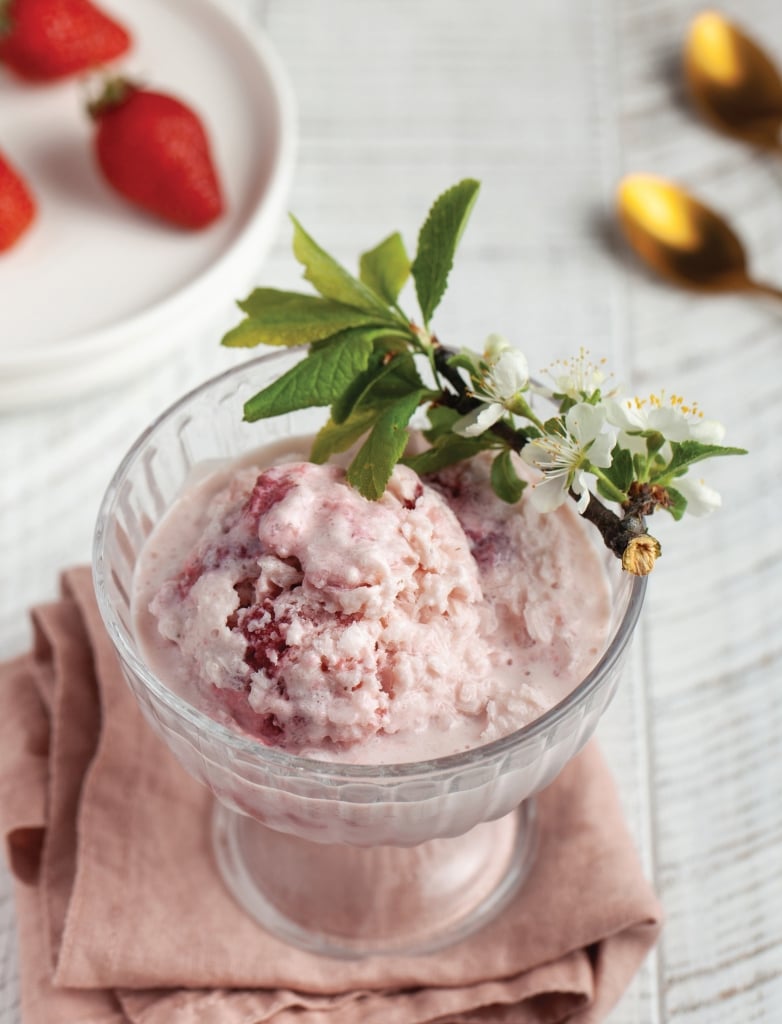
Technological inventions in the 19th century, including mechanical refrigeration, led to the treat becoming popular on a wide scale. By the 20th century, there was an ice cream parlor or soda fountain in almost every town. Today, the average American consumes roughly 19 pounds of ice cream every year. Indeed, the ice cream market is expected to reach $132.32 billion in 2032 from $79.08 billion in 2024, a 67% percent jump in sales over the course of the next decade. But why? Ice cream’s growth is fueled by a larger shift in consumer behavior, as people increasingly gravitate toward nostalgic, feel-good indulgences.
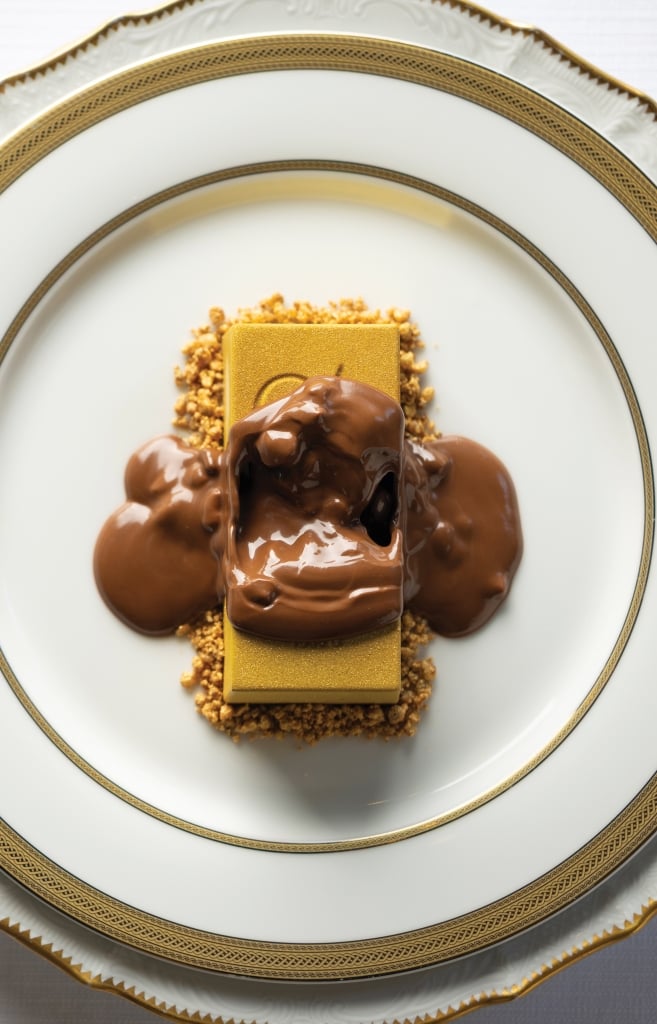
A Gold Brick Sundae at Sea Island.
Thomas knows that ice cream brings comfort, which is why he’s careful not to fiddle too much with signature ice cream concoctions across the resort’s dining establishments. These include Wonderland, an ice cream parlor and candy shop at the Beach Club that offers a topping bar with over twenty different options, as well as the Sea Island signature Gold Brick Sundae. “My goal is to continually elevate our dining program, including our ice cream, with innovation while at the same time never compromising on flavor or Sea Island tradition,” Thomas says.
Served at the resort for as long as anybody can remember, the Gold Brick Sundae relies on simplicity. According to Thomas, it is three scoops of vanilla ice cream covered in a milk-
chocolate hard-shell glaze, loaded with toasted pecans. No whipped cream, no fancy sauces. Just quality local ingredients.
The basic recipe for the Gold Brick Sundae will never change—as it has been a member and guest favorite for decades—but 2026 brings some new touches to the classic. These include new proprietary molds to form the chocolate, which is finished with a 24-karat gold coating and customized branding for each dining venue.
“They’re like giant, golden bonbons,” Thomas promises. Now that’s true indulgence.
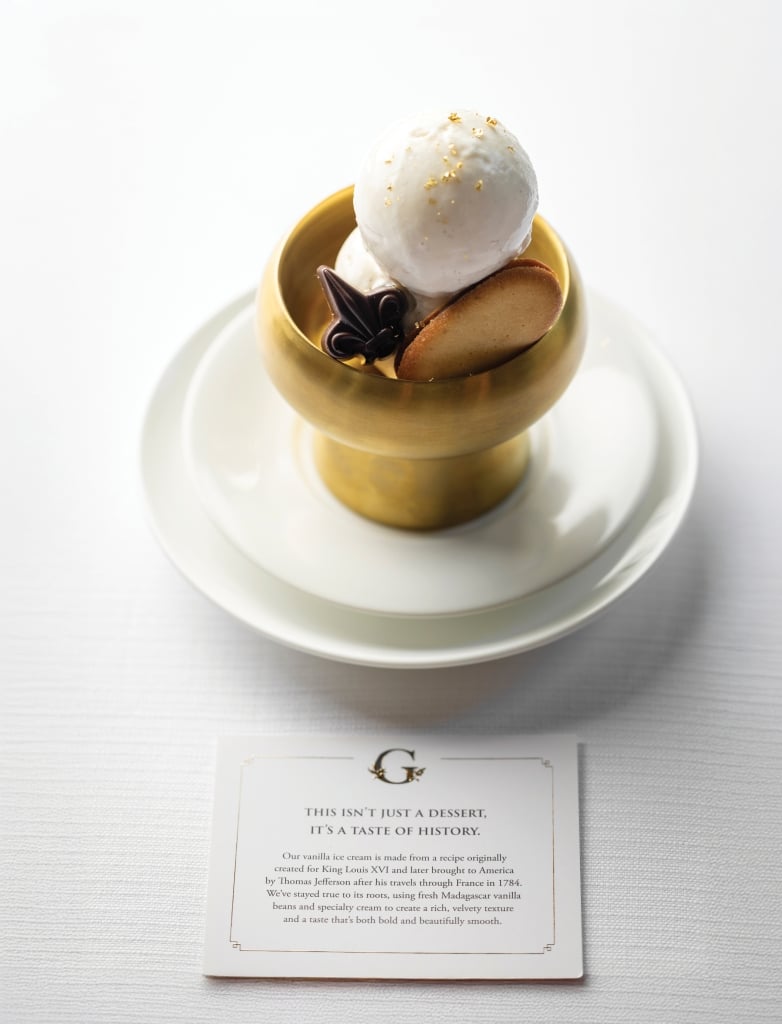
THOMAS JEFFERSON’S ICE CREAM
Prep Time: 30 mins
Cook Time: 30 mins
Yields: 3 servings
- 2 quarts cream
- 6 yolks of eggs
- 1 1/4 cups sugar
- juice of 1/2 lemon
- 1 Madagascar vanilla bean
Whisk together the egg yolks and sugar until creamy and lightened in color. Set aside.
Place the cream in a saucepan. Split vanilla bean in half lengthwise with the tip of a small knife. Scrape both sides of the bean with the knife’s dull side and add the seeds and bean to the cream. Place the saucepan over medium heat until the mixture is nearly boiling.
Remove the cream mixture from the heat, and very slowly add ½ cup of the hot cream to the egg yolk mixture, whisking constantly. Pour the now-warmed egg yolk mixture into the hot cream, whisking to combine.
Return the saucepan to the stove, stirring constantly over medium heat until the mixture is thick and coats the back of a spoon. Remove from the heat and strain through a fine mesh sieve.
Allow mixture to chill in the refrigerator for several hours or overnight. When ready to churn, follow the manufacturer’s directions on your ice cream maker to churn and freeze ice cream.
Thomas Jefferson was the first American known to record a recipe for ice cream, and it remains one of only 10 recipes preserved in his original handwriting. He likely encountered the dessert while serving as the United States’ minister to France and attributed the recipe to his French butler, Adrien Petit. In celebration of the nation’s 250th anniversary, Adam Thomas, Sea Island Culinary Director, and his team are recreating this historical recipe at restaurants across Sea Island this year.
A Repository For Innovation
The golden age of ice cream is not only about preserving nostalgia. It is also about embracing innovation and reinterpreting the dessert in modern ways. First, however, you need the perfect balance of cream or non-dairy creamer, sugar, salt and air to create a flawless base. Chefs can spend months perfecting this.
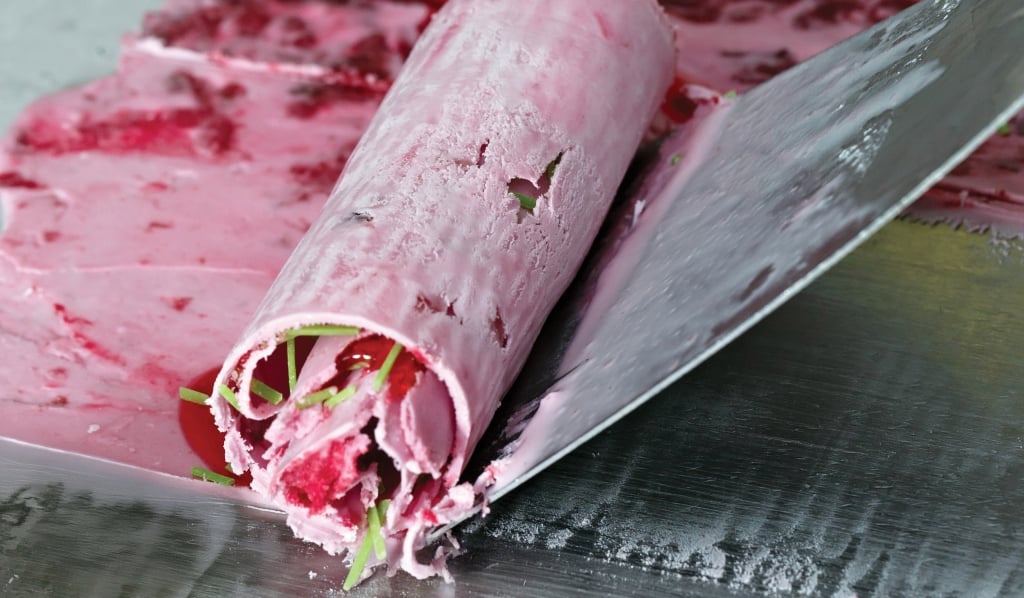
Rolled Thai Ice Cream
Alex Green, the Chef at Mileta in Lexington, Kentucky, used skills learned while acquiring his bachelor’s in science and his culinary degree to experiment with the soft serve machine he bought for the restaurant. Once he had a base that wouldn’t collapse out of the machine, he created the Parmesan soft serve ice cream sundae, which is infused with the rinds of Parmesan, and then topped with extra virgin olive oil, balsamic vinegar, flaky sea salt and thyme-infused meringue sprinkles. The item is so popular that he can’t take it off the menu.
Other popular technique-driven creations included rolled ice cream, which is made by pouring a traditional base on an extremely cold metal pan, thereby freezing it instantly. The resulting creation is rolled off the pan in spirals and served in cups. Similarly, traditional bases can be poured into liquid nitrogen, instantly freezing the liquid into what many call the creamiest ice cream they’ve ever tasted, due to the lack of time for ice crystals to form in the base.
These methods, which allow ice cream to be made to order in small batches, allow for endless innovation. The chain Chill-N Ice Cream in Miami, which uses liquid nitrogen to create its treats, lets customers choose from a broad array of dairy and non-dairy bases, including almond milk and oat milk, which are then combined with flavors such as Yodha Matcha, Guava and Cream Cheese and Pumpkin to create completely bespoke flavors that cater to individual taste buds.
Chefs see the potential in these methods, which allow them to highlight single-origin dairy, seasonally sourced fruits and nuanced flavor infusions, ensuring every bite is a balance of taste and texture. “Flavor is what ultimately makes ice cream so appealing,” says Leopold. He’s not opposed to experimenting with trendy ingredients and loves sampling new flavors, but his favorite has always—and will always—remain plain vanilla ice cream. Cream, sugar, milk, salt and vanilla. Nothing simpler.