


Birds of a Feather
Every fall, birds migrate south along the Atlantic flyway.
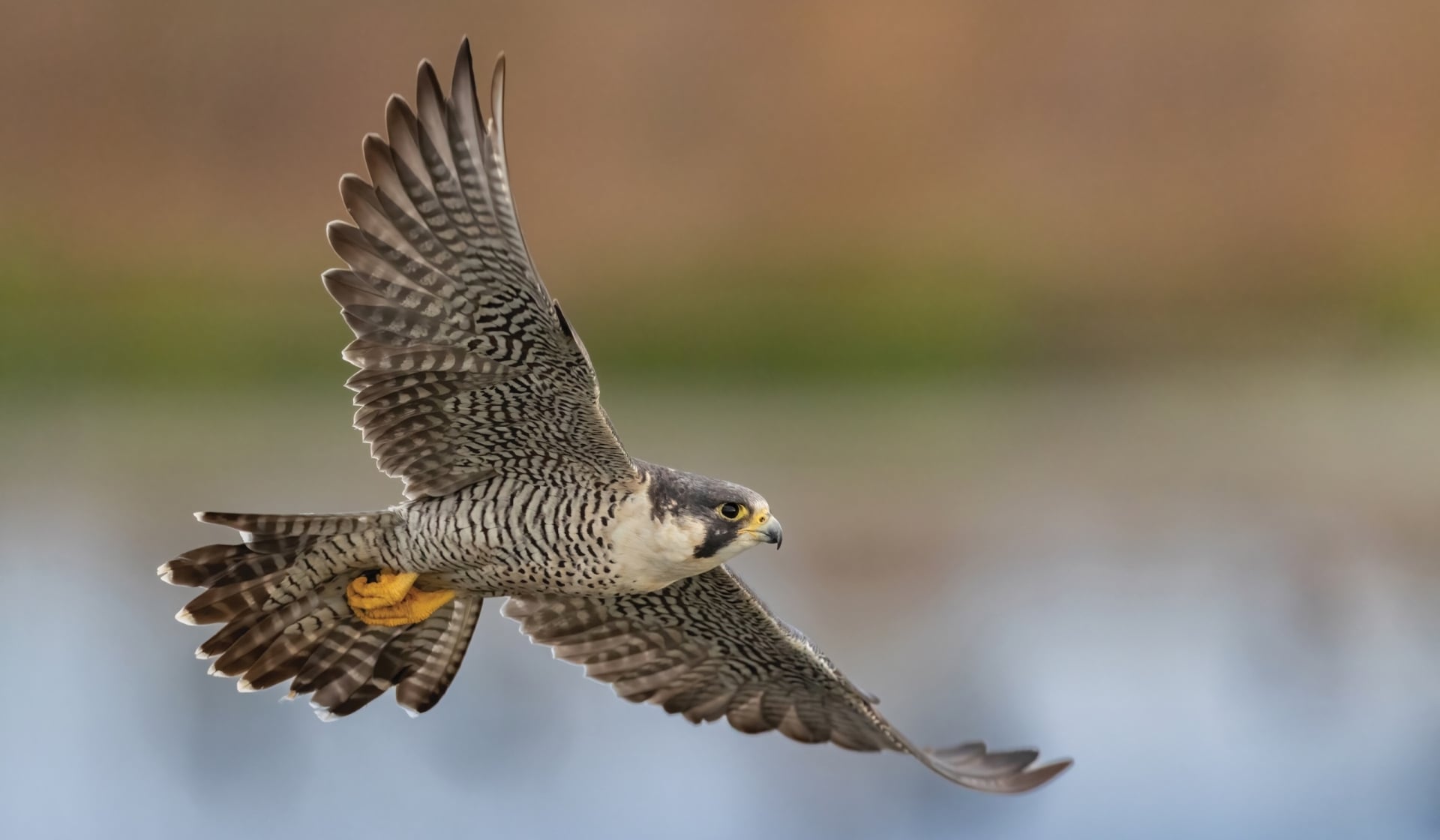
Peregrine Falcon
It’s hard to forget one’s first time seeing a muster of wood storks — brought back from the brink of extinction in one of Georgia’s great conservation success stories — bright white, stark black and standing about as tall as a gaggle of kindergarteners. Or the vibrant roseate spoonbill, with its unmistakable platypus-like bill and feathers in an exotic flamingo-pink hue.
Through the warm months, these avian showstoppers might be spotted in the salt marshes around Sea Island and St. Simons Island. But come fall, they disperse to their rookeries, and the coast fills with seasonal newcomers.
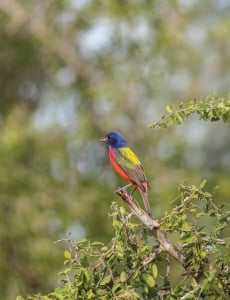
Painted Bunting
The Golden Isles’ Fall Migration
As hundreds of millions of shorebirds, songbirds and raptors migrate south along the Atlantic Flyway — one of North America’s four major migratory paths — from late summer into November, Sea Island welcomes them in overlapping flocks.
More than 200 species have been observed at local hotspots, where dozens of species live year-round, and dozens more, including some of the continent’s rarest, use these precious coastal habitats to feed and rest.
The coast is full of surprises even for those who know it well. Sea Island Lead Naturalist Haley Watkins says, “Wandering along forest trails and marsh edges always feels like a wild adventure far away from civilization, full of new discoveries.”
For Watkins, the calendar is measured by the birds that arrive with each season. In winter, tree swallows flock over the island. Spring brings foraging shorebirds in breeding colors. As summer comes around, her team will find nesting Wilson’s plovers in the dunes, and in the fall, the songbirds arrive.
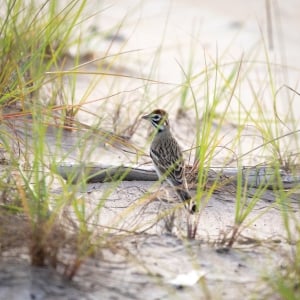
Lark Sparrow
Her favorite bird “changes by the week,” she says, but a few visitors stop her every time. Lately, she delights in seeing the red knot. This robin-sized sandpiper, listed since 2015 as threatened under the Endangered Species Act, makes one of the longest migrations on the planet, from the Arctic to the southern extreme of Tierra del Fuego, a journey that may top 9,000 miles. “When I spot red knots on our beach, I am always in awe of the incredible distance they have traveled,” she says.
Birders from surrounding areas, and even surrounding states, also flock to this coast to appreciate the spectacle of the migration’s sights and sounds. Among them is Patty Kappmeyer, Founder of Lowcountry Birds and Nature and Author of “Flight Through the Seasons,” who has established herself as a leading expert in birding and wildlife photography.
“Early birds may have the best view of the passerine songbirds,” she says. Warblers, vireos, tanagers, bobolinks and sparrows fly at night, drop into maritime forest and marsh edges at dawn, feast for a day or two, then depart again after dark. Peregrine falcons and northern harriers hunt over the marsh. Shorebirds feed along the exposed mudflats and the wrack line, pecking and searching for tiny invertebrates. “Some Arctic visitors,” she adds, “arrive still cloaked in breeding colors before molting into winter gray.”
While some migrants are only passing through, others stay until spring, including the Great Lakes population of piping plover, another threatened species. There are just 70 to 80 breeding pairs of this group left in the world. True “snowbirds,” they stick around, weathering the winter along the calm coasts of the Golden Isles.
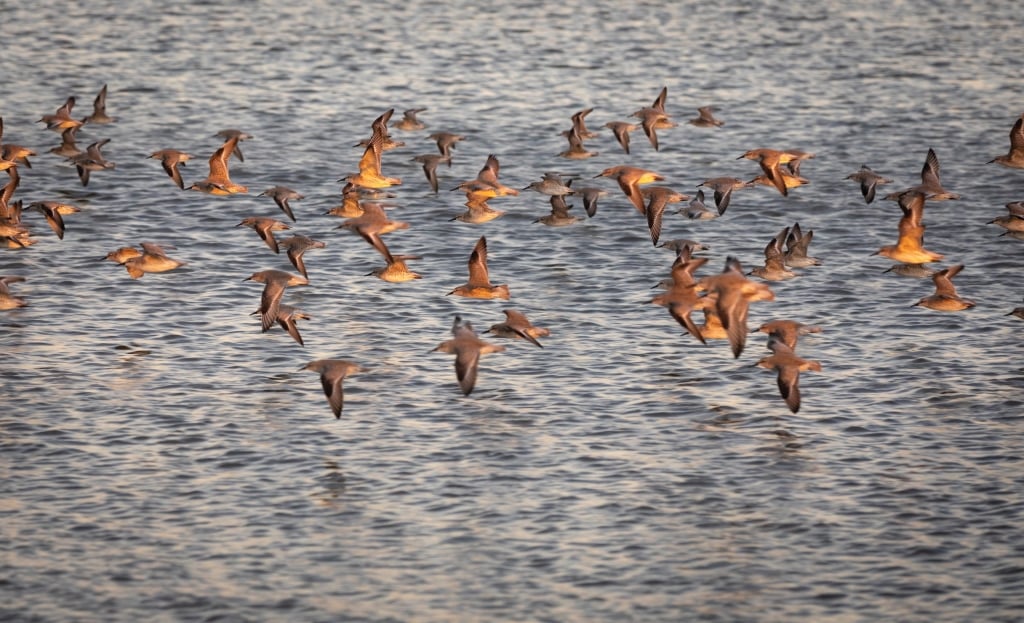
Red knots in flight.
Looking Out for Local Birds
Kappmeyer’s advice to fellow birders: Give them space. “The birds are here to feed and rest, and human disturbances — especially dogs — cause them to lift and move, using up energy.”
Sarah Manning, Conservation Lead at Birds Georgia, notes that the features that make the coast good for birds can also make them easy to disturb. “Be mindful of signage around protected areas,” she advises. “The sea oats along the sand dunes are protected by state law,” she adds. Their roots help keep the dunes in place and shelter birds whose nests are so camouflaged, they are nearly impossible to spot.
How to See the Migration
“A first-time birder’s perfect starting point is the Sea Island Nature Center,” Watkins says. Chat with a naturalist about what they’re seeing. “Sometimes spotting a rare species can be as easy as getting a tip from a fellow birder about where that species was last spotted.”
Learning a few bird calls helps burgeoning birders spot new species, too, she adds. “Once you become familiar with the songs and calls of specific species, you can become so much more aware of the wide array of birds around you, even when they may be hidden in plain sight.”
For a deeper dive into the region’s habitats, pick up local texts such as the “Field Guide to Sea Island: A Pocket-Sized Companion to the Great Outdoors” in the Nature Center or Coastal Experience Center, or H.E. Taylor Schoettle’s “A Field Guide to Sea Island” and “A Naturalist’s Guide to St. Simons Island.” For a guided outing, the Nature Center offers members and guests an accessible Birding Tour year-round: an approximately 90-minute golf cart expedition led by a Sea Island Naturalist, maybe even Watkins herself. Binoculars are provided, reservations are required and birders 15 and younger will need to bring a parent along.
“I always recommend it as an exciting way to discover something new each time they visit the island,” Watkins says of the tour, “since no two birding tours are ever alike.”
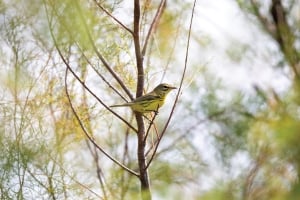
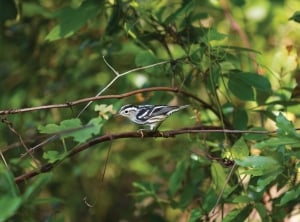
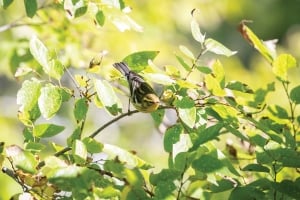
(left to right) Prairie Warbler, Black-and-White Warbler; Blackburnian Warbler.