



Brine and Dandy
Savory, seasonal ingredients causing a stir in the cocktail world.
Twenty years ago, it was cutting-edge, or even strange, for a bartender to shop the farmers’ market for drink ingredients or juice vegetables behind the bar. Today, cocktail menus draw from the very same techniques that transformed restaurant kitchens: fermenting, pickling, smoking and infusing. According to VinePair’s 2026 bartender survey, the savory cocktail movement “shows no signs of slowing,” with bartenders also predicting more umami flavors — from miso to anchovy brines — behind the bar.
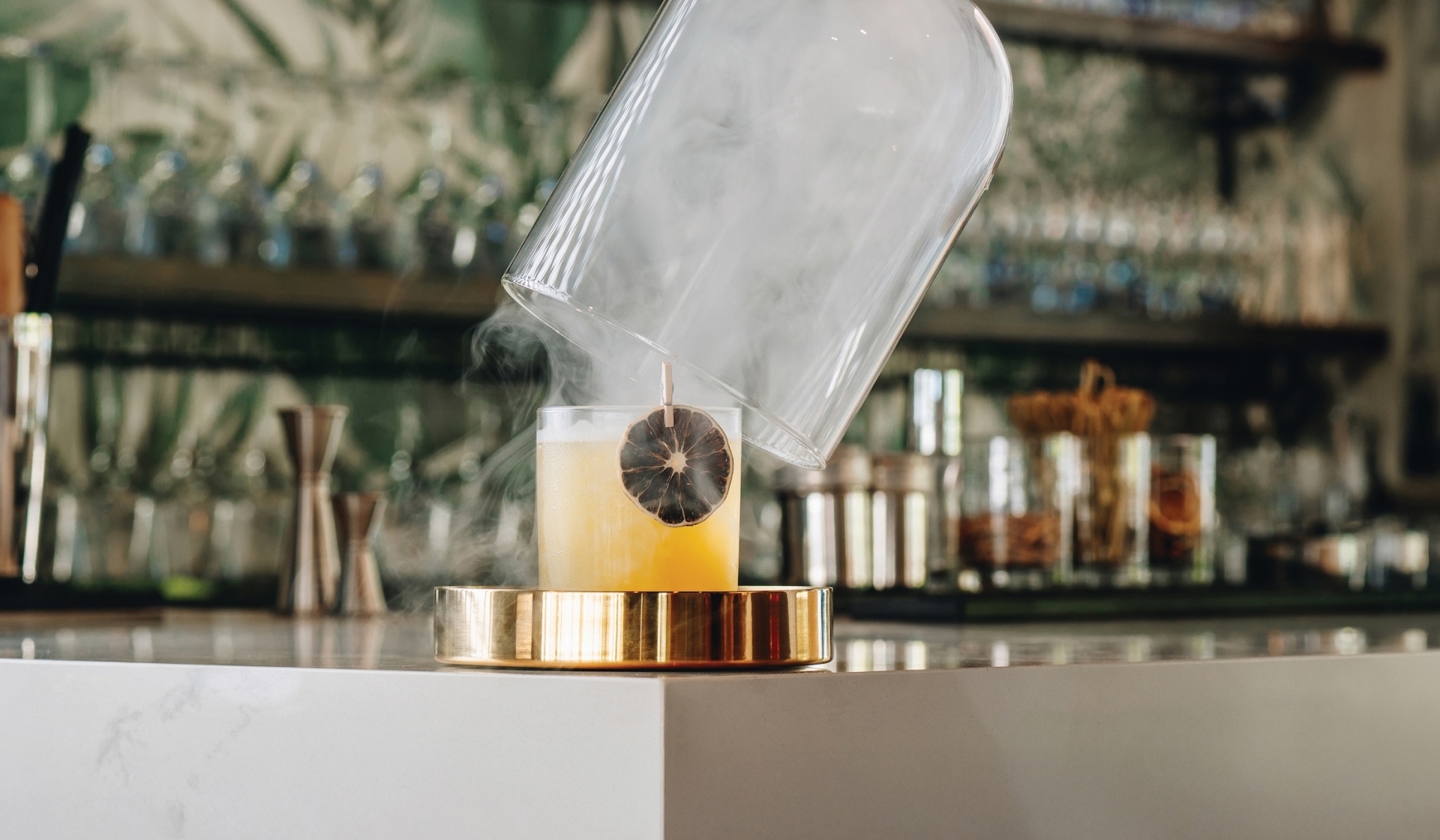
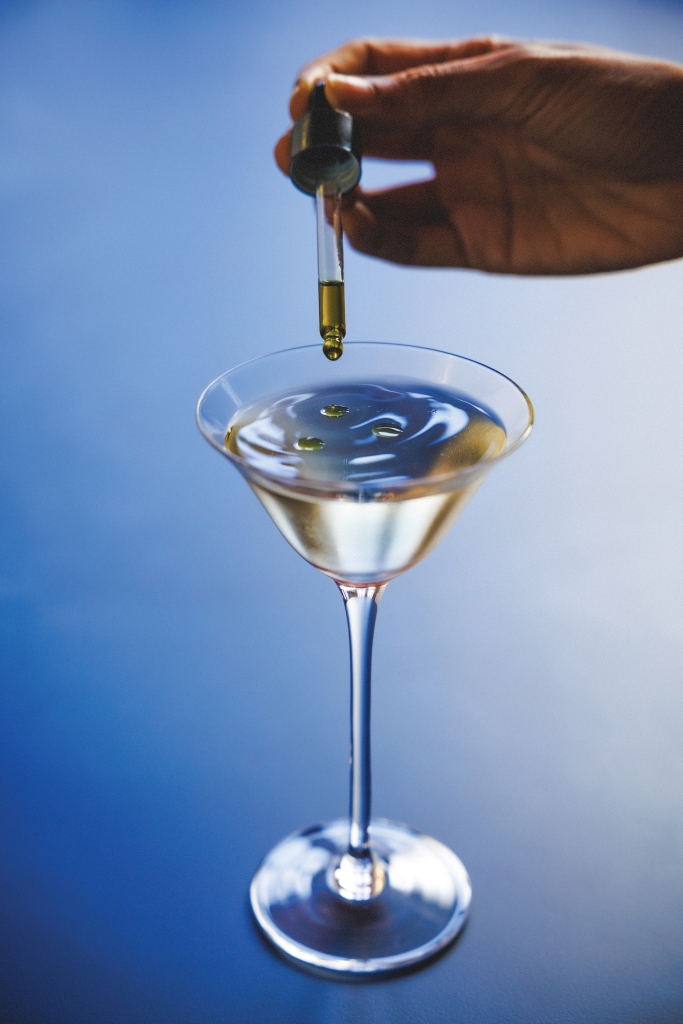
At Superbueno in New York, the Mushroom Margarita incorporates a fungal Mexican delicacy called huitlacoche. At Tayēr + Elementary in London, the bar team clarifies San Marzano tomato juice for four days at a time just to make the martini. At FURA in Singapore, an invasivore’s gin martini features an invasive jellyfish species.
The bartenders behind these concoctions are drawing on the same trends and ideologies that have shaped the food scene in recent years. These include hyper-locavorism, which emphasizes ingredients sourced from nearby; invasivorism, which puts invasive species on the menu; seasonal sourcing; a no-waste ethic; and a growing distaste for artificial ingredients. Now, those principles are moving from the plate to the glass.
THE EVER-DIRTIER MARTINI
Umami drinks may be having a moment in 2026, but bartenders have been shaking and stirring up savory flavors for well over a century. Take the lunch-in-a-glass, tomato-and-spice Bloody Mary, which emerged in the early 1900s. Its courageous clam juice cousin, the Bloody Caesar, came along later, devised at a bar in Calgary, Canada in 1969. These savory classics were, for decades, on the fringes of a cocktail culture centered around syrupy sweet. Now changing tastes in recent years have brought these classics — once considered campy — back into vogue.
Robby Nelson, a Brooklyn bartender-turned-longevity coach — previously of Long Island Bar, now Founder of The Long Run — has seen bar patrons’ palates evolve. “I think people are excited by new, different flavor profiles,” he says. “It may be part of the move away from sweet, everyone asking for ‘not too sweet,’ towards something more savory that they may not have realized could be represented in a cocktail.”
While some of this is about flavor, some is a matter of style. The Martini came back, and it came back hard. The popularity of this 007-meets-Mad Men classic was already on the up before 2020, but in the past six years, it skyrocketed, with classic martinis selling nearly 10 percent faster year over year between summer 2022 and summer 2023, and dirty martini sales jumping far more dramatically that same year. In 2025, Resy was hailing the martini resurgence as a comeback like few other drinks have ever seen.
The martini’s classic structure proves endlessly customizable, which consumers trading concepts and recipes on social media seemed to love. According to cocktail kingpin Tyson Buhler of Death & Co, martinis, dry and dirty, opened the door to savory, nudging both consumers and bartenders to consider adventurous new iterations.
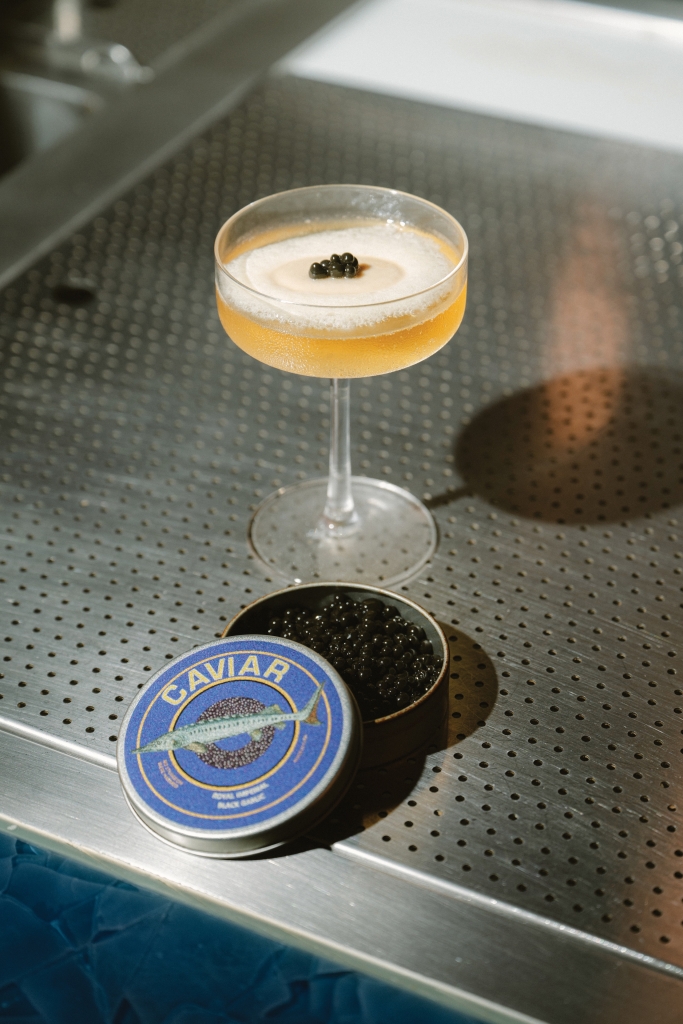
Caviar Papi cocktail from FURA.
How Far Will Cocktail Chefs Go?
Chef James Gop, of open-fire, pop-up restaurant and experiential dining outfit Heirloom Fire in the Berkshire hills of Massachusetts, takes savory cocktails to cinematic extremes.
As part of a winter dining series he called Wildland, Gop and a friend built an entire evening’s menu from a single deer they’d hunted together plus accompanying courses from ingredients they foraged on the same outing. Dinner guests were welcomed with a warm drink served in hollow vessels made from antlers: a clarified venison bone broth steeped with sumac, angelica root and bourbon.
Spiking a warm broth with liquor goes back decades. Take the Bull Shot (beef bouillon and vodka), poured at Detroit’s Caucus Club starting in the 1950s. Beef teas preceded that. But it is an idea Gop felt would be well-received as diners and drinkers are increasingly more open to narrative dining experiences and no-waste food ideologies. Gop’s horn of venison broth set the table for a modern spin on a throwback.
“Fat-washing is also having a moment,” Gop says. He browns butter, stirs it into the spirit, freezes it and then strains the solid fat from the alcohol through cheesecloth for a rounder, fuller, smoother taste.
WHERE THE KITCHEN MEETS THE BAR
Some bartenders are chefs, and vice versa. At some food programs, bartenders and chefs are increasingly working together. At Broadfield, a Sea Island Sporting Club and Lodge, Chef de Cuisine Paula Garrett grows and forages the raw ingredients for Sea Island Bars and Spirits Manager Nic Wallace’s cocktail visions. A naturalist, Garrett loves foraging in the property’s woods and marsh, where wild dill grows six feet tall and white ginger comes up in the damp ground.
Garrett cans and smokes her haul from the Broadfield garden: a day’s 40 pounds of cucumbers becomes spicy relish; Broadfield tomatoes and house-smoked bacon become a jam.
Chefs across Sea Island might make use of these products, but Wallace is also on her list. One of Wallace’s menus honed in on single ingredients and sought to use each several ways in a single drink. Garrett’s ginger, for example, might show up three times in the same glass: juiced, reduced and muddled fresh.
“I think a culinary approach to cocktails is more expected these days than it once was,” Wallace says. “Everything from oyster shells and cheese, to toasted pumpkin seeds and even certain algae — it all has a culinary focus in our cocktail program.“
GARDEN TO GLASS
What’s the perfect gin for pairing with a platter of oysters? Bars and Spirits Manager Nic Wallace set out to create it. In crafting a private-label gin for Sea Island, he chose a base already well-suited to the job: Murrells Row’s Gin Mignonette, a savory Decatur-made spirit distilled with olive oil and Vidalia onion. Then he called in Broadfield Chef de Cuisine Paula Garrett, who harvested a wishlist of botanicals from across Broadfield’s 5,800 acres. She pulled natives like yaupon holly to exotics like wild white ginger. After dozens of test batches, toggling flavors and trialing new ingredients, Wallace landed on the final product: delicately salty and subtly sweet, with a delightful, lingering mouthfeel, and Broadfield’s own wild dill and bay laurel in the mix. A 50/50 martini with this gin and a French blanc vermouth, Wallace adds, “truly lets the magic of Chef Paula’s herbs shine.”
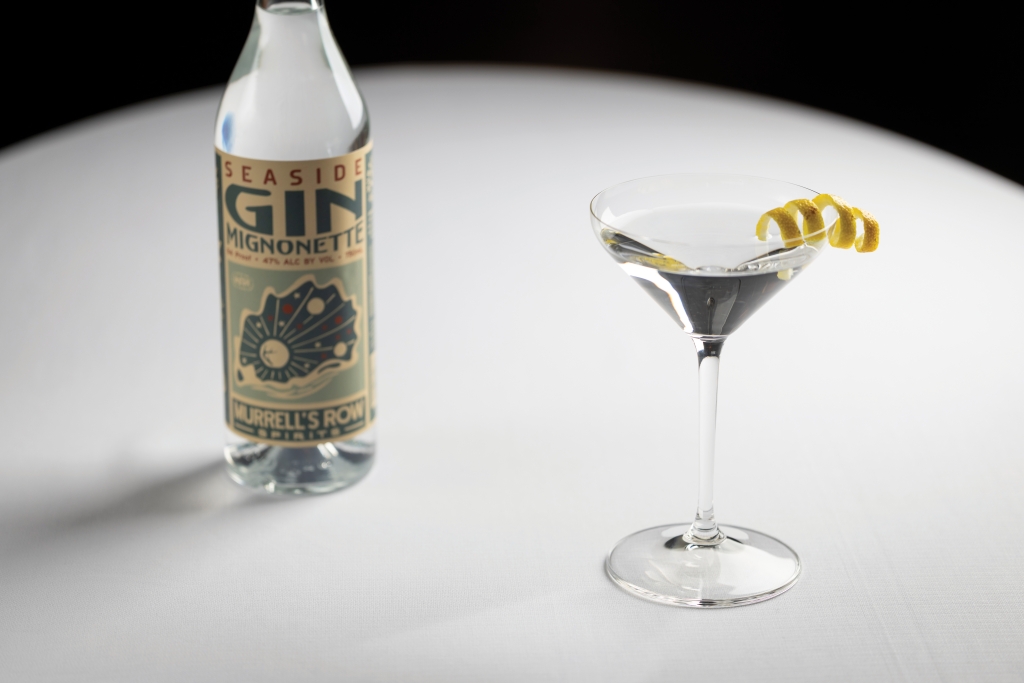
NIC’S 50/50
Ingredients:
1.5 ounces Murrell’s Row Seaside Gin Mignonette
1.5 ounces Dolin Blanc Vermouth
2 dashes Angostura Orange Bitters
Lemon peel
Glass: martini or coupe
Garnish: 1 long, thin lemon twist
Method: Combine all ingredients in a mixing glass with ice. Stir for 7-8 seconds, then strain into a chilled martini or coupe glass. Garnish with a long, thin lemon twist.
TIPS FOR THE HOME BAR CHEF
In the twenty-aughts and twenty-teens, Los Angeles barman Christiaan Röllich was at the head of this trend. In his 2019 book “Bar Chef,” he offered advice to the home bar chef, from tools to prep.

The next round en route to The Cloister dock.
In addition to a jigger, cobbler shaker, mixing glass and Hawthorne strainer, Röllich keeps a suite of kitchen tools behind the bar: a Vitamix, an electric juicer, a cone-shaped chinois, a U- shaped vegetable peeler and a sharp chef’s knife. He cuts fruit and trims garnishes with the chef’s knife on a full-size cutting board, his bar prep indistinguishable from a colleague’s kitchen station.
One slice of wisdom: The garnish is as key as any other ingredient. A sprig of mint, basil, rosemary or sage brings “another dimension to your beverage through its scent,” he writes, and for his drinks, he’ll use a small, new-growth sprig or squeeze a citrus twist, and sets it at the edge of the glass where a drinker will catch the scent before the first sip.
That same attention to individual ingredients extends to when they are a part of the base recipe. Seasonality, then, becomes another consideration behind the bar, just as it is in the kitchen. Röllich prefers to cook with the calendar by muddling peaches only when they’re in season, then he turns to apples or pumpkin when those are at their peak. Working with ingredients at their best can give a cocktail a sense of place and time, while also allowing the flavors to speak for themselves.
The savory cocktail, in the end, is an old idea coming back around. The through-line, from Gop’s deer-bone broth to Wallace’s Broadfield-foraged ginger and Röllich’s farmers-market haul, is that the best savory cocktails, like the best dinners, make the most of the season and the sourcing. In that sense, they are less of a departure from the traditions of the bar and more of a return to one of the kitchen’s oldest principles: start with good ingredients and let them lead the way.