



Finishing Touch
Garnishes elevating flavor, fragrance and the impression of the first sip.
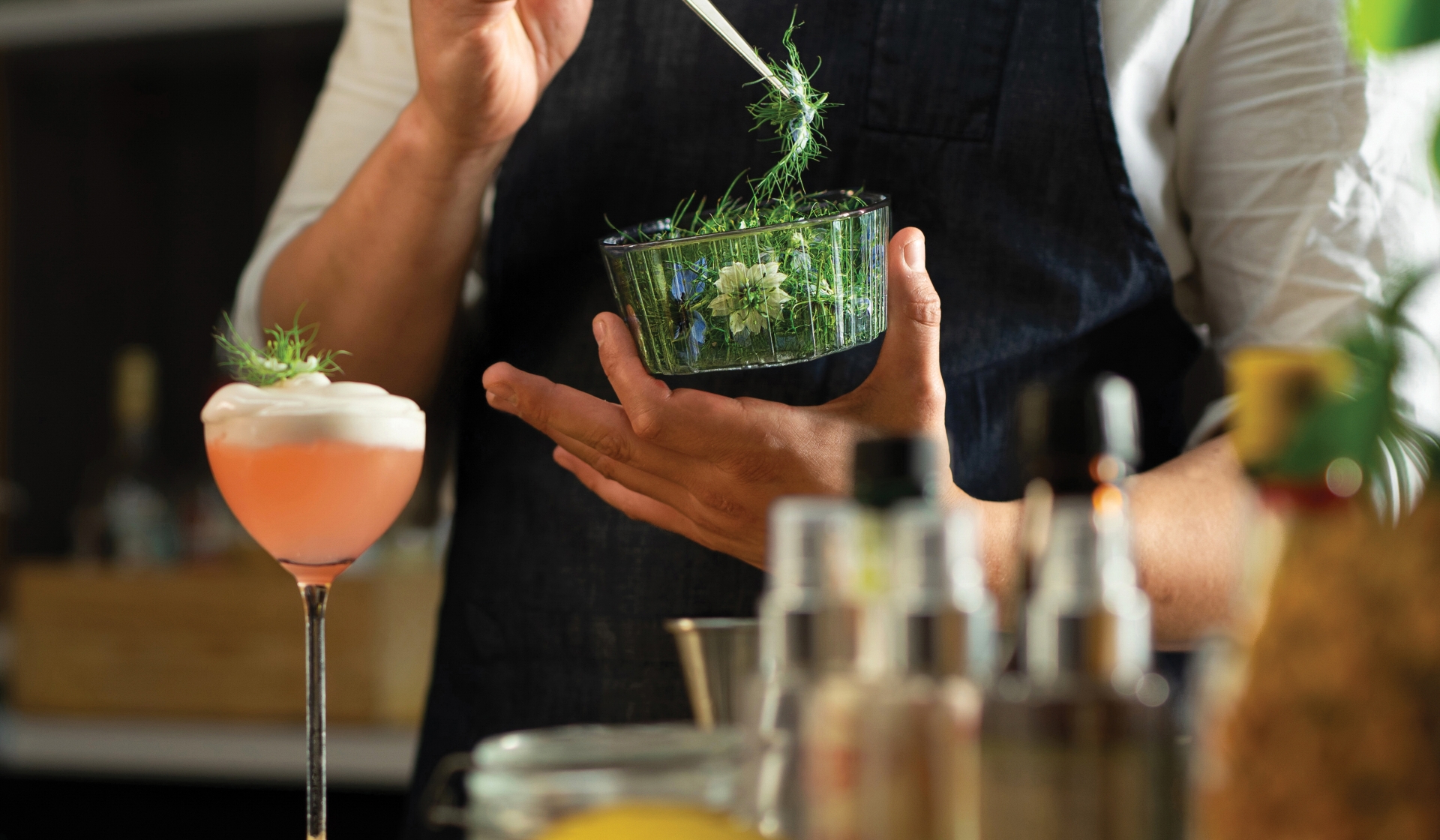
Imaginative garnishes, defined as much by their presentation as by their flavor, can transform drinks into works of art meant to be admired, savored and remembered long after the glass is empty.
Whether they’re adorned with perfectly stacked skewers, edible blooms and other culinary flourishes, today’s cocktails are culinary masterpieces—each with a story inspired by history, a sense of place and the imagination of the hands that crafted them. The cocktails arrive with a story already unfolding, even before anyone takes the first sip.
“Cocktail garnishes carry meaning in the same way poetry, food or rituals do. They condense a story into something small, sensory and immediate,” says Steve Turner, Head Mixologist at The Free Spirits Company, a California-based independent nonalcoholic spirits brand. “Because a garnish is the first thing a guest sees and smells, it becomes a powerful narrative device often communicating more than the liquid itself.”
From Function To Finesse
Cocktail garnishes didn’t begin as decoration. Their earliest purpose was practical: to improve flavor, aroma and drinkability at a time when spirits were rough, inconsistent and often poorly distilled.
Early bartenders relied on citrus peels, herbs and spices to mask imperfections and soften the drinking experience. This approach mirrored the use of bitters, citrus and aromatics that helped medicinally and gastronomically to aid digestion and improve taste.
The citrus peel, one of the earliest garnishes, played a key role. The scent of lemon or orange oils enhanced the drink through the aroma, sharpening the perception of its flavor and laying the groundwork for what modern mixologists now understand as multisensory design.
By the 20th century, many bartenders were garnishing cocktails with lemon peels and olives—subtle hints at what the drink promised. Pineapple garnishes suggested tropical escapism, while cherries hinted at sweetness and indulgence. Mid-century Tiki culture introduced extravagant non-edible garnishes such as paper umbrellas, orchids and even flaming citrus shells.
Over the last several decades, bartenders and mixologists began reimagining cocktail garnishes with a renewed emphasis on flavor, aroma and intention.
Dehydrated citrus wheels intensify aroma without dilution. Smoked herbs add depth to aged spirits. Flavored salts and zested sugar rims fine-tune balance. Zero-waste garnishes repurpose citrus husks, herb stems and spent botanicals, reflecting sustainability as well as creativity.
Caviar Garnish
Today’s garnishes have become impressive culinary creations that directly influence the cocktail’s perception, aroma and taste—and are just as delicious when savored on their own.
“Borrowing from culinary techniques works best when the garnish feels intentional, edible and connected to the drink, not just outrageous,” Taylor says. “The grilled-cheese-on-a- Bloody Mary example works because it hits flavor logic—salt, fat, acid—and cultural familiarity.”
Once-humble standbys like the celery stick, long synonymous with the Bloody Mary, now compete with pickled vegetables, herb bundles and savory skewers designed to complement the drink’s profile rather than overpower it.
At their best, garnishes act as flavor guides, reinforcing or balancing a spirit’s core characteristics. Citrus brightens botanical gins by amplifying freshness and lift. Smoke deepens whiskey’s caramel and oak notes. Fresh herbs complement tequila’s vegetal qualities, while subtle sweetness, through fruit or sugared rims, can soften bitterness in amari or aperitifs.
Rather than decoration, the garnish becomes a strategic final adjustment, shaping how the drink is perceived from nose to finish.
Nic Wallace, Resorts Bar and Spirits Manager at Sea Island and the best bartender in the country by the United States Bartenders’ Guild, says garnishes must be beautiful, edible when appropriate, textural and often sustainable.
His “Last Tango,” a Margarita variation that has become one of the resort’s most popular cocktails, repurposes cantaloupe used in the drink itself. The fruit is formed into small spheres, dusted with cayenne salt and served on a basil “boat,” reinforcing the cocktail’s sweet heat while minimizing waste. The garnish becomes both accent and bite—a savory-sweet echo of the flavors in the glass.
Other menus across the property feature equally considered details: Caprese-style skewers of tomato, cheese and basil accompanying martinis; Brie crisps paired with a cheese- washed cocktail; and blueberry “caviar” that crowns a drink with a delicate, jewel-like finish.
While most of his garnishes are edible, Wallace sometimes brings in the playful. For example, a rose-inspired cocktail arrives with a bloom concealed inside flash paper; when lit tableside, the paper vanishes in a brief flare, revealing the flower beneath and turning the pour into a moment of theater.
In another cocktail, a replica of the historic Sea Island Scrip—a paper currency once used to pay employees during the Great Depression—adorns the glass. It’s a visual tribute to the island’s past and a reminder that every cocktail tells a story.
“Our team loves to dive into the history of the area and the history of Sea Island,” he says. “That back story matters. Every detail, from the garnish to the glassware and even to the ice, plays a role in the story we’re telling.”
Despite the spectacle, clarity, safety and intention remain paramount. Inedible elements stay outside the glass, and bartenders guide guests on what can be enjoyed and when. In Wallace’s hands, the garnish serves as both exclamation point and connective thread— reinforcing flavor, honoring place and heightening anticipation before the first sip.
“We want every cocktail to feel thoughtful,” he says. “Whether it’s edible or symbolic, the garnish should always make sense with the experience.”
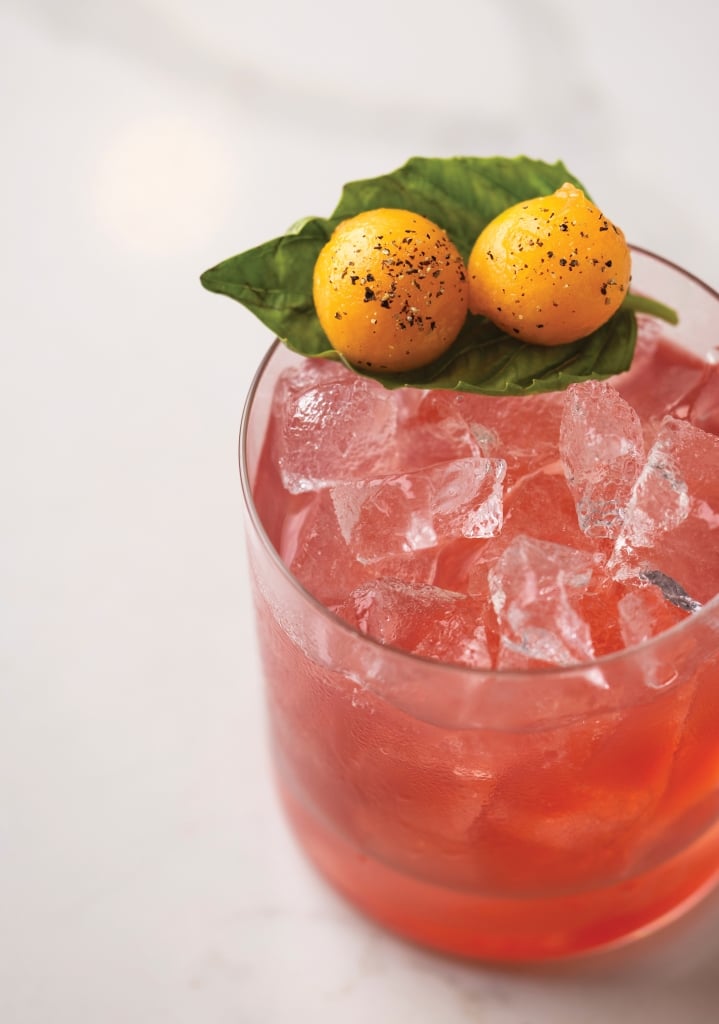
The Last Tango
The Last Tango
GLASS: Double Rocks
ICE: Standard
GARNISH: 1 basil leaf, 2 cantaloupe spheres dusted with cayenne salt
- 2 ounces hibiscus-infused Corazón Blanco Tequila
- 1 ounce fresh lime juice
- 1 ounce agave nectar
- 3 small pieces of cantaloupe
METHOD
Combine all ingredients in a shaker tin, muddle the cantaloupe, then add ice. Hard shake for 5-7 seconds, then double-strain the cocktail over fresh ice. Garnish and serve.
HIBISCUS INFUSED TEQUILA
Combine 1 ounce of dried hibiscus leaves in 1 liter of tequila. Allow the mixture to infuse for 3 hours, then strain the tequila.
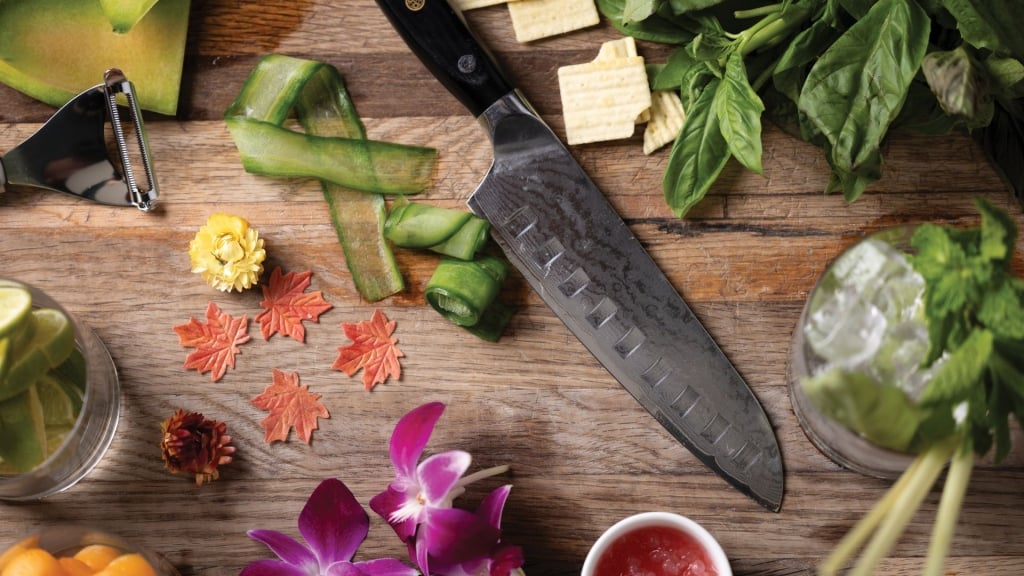
Building garnishes in Tavola at Sea Island.
Local Influences
Many garnishes also reflect a sense of place. Jonathan Hall, Bar Manager at Ranch 616 in Austin, Texas, uses Texas ruby red grapefruit quarters to garnish the restaurant’s Palomas and draws upon personal experience for his espresso martini.
“The martini garnish is Abuelita dust, which is a Mexican hot chocolate mix that my Hispanic mother made for us as children,” he says. “I wanted it to be part of that cocktail as the base spirit is very evocative of Mexican hot chocolate.”
Most importantly, the garnishes can fill in for what the spirit might be lacking.
“You balance them by deciding what the drink may be lacking in its components and supplement with a garnish,” Hall says. “Missing herbaceous notes? Add a rosemary sprig or some Thai basil. Missing an acidic bite? Try some pickled asparagus.”
In the South, garnishes can draw from agriculture, preservation traditions and hospitality rituals. Examples include pickled peaches, okra or watermelon rind on spritz-style drinks or chow-chow brine mist or pickled pepper rings for savory cocktails.
“Think of garnishes as a way to name the place without saying it out loud,” he says. “A garnish signals legitimacy. It often adds to the sensorial experience, which is, after all, what a great cocktail is all about.”
‘First Sip Effect’
Even before a cocktail is tasted, it is already being experienced. It’s the chill of the glass against the fingertips, the clarity of a single, round ice cube and the quiet heft of the glass itself. The senses are awake, and the cocktail is shaping expectations.
This sensory sequencing, described by bartenders as the “First Sip Effect,” has become central to modern mixology. Today’s most thoughtful drink programs are designed to impress in the moments leading up to that initial taste, when aroma, temperature and visual cues quietly prepare the brain for what is to come.
In “Liquid Intelligence: The Art and Science of the Perfect Cocktail,” bartender and author Dave Arnold emphasizes that elements such as dilution, temperature and aroma are not finishing details but foundational components. The human palate perceives flavor through more than taste alone. Aromatic compounds rise from the glass and unfold through the nose as you sip, glassware weight subtly influences perceived richness and proper dilution softens alcohol’s edge while enhancing texture.
Crystal-clear ice slows dilution and signals craftsmanship. A chilled coupe preserves structure. A well-placed herb sprig or expressed citrus peel primes the nose, amplifying brightness or depth. Even the heft of a rocks glass can subtly suggest strength and gravitas.
What feels effortless is often meticulously engineered. When balance is achieved at that first encounter as aroma, temperature and presentation align, the drink doesn’t just taste right. It feels right.
Anticipation gives way to memory, and the story of the cocktail is complete.
“Every detail matters to that story of the cocktail,” Wallace says. “It’s about being thoughtful in every detail of the process and remembering the sustainable and mindful use of ingredients in cocktail creation. No detail is incidental.”lfer and caddie is what keeps the tradition alive. As Brannen Veal, Director of Sea Island Golf Club, puts it, “It is all about building that bond and that relationship.”
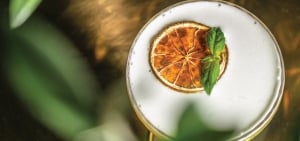
Dried citrus and fresh basil in a frothy cocktail.
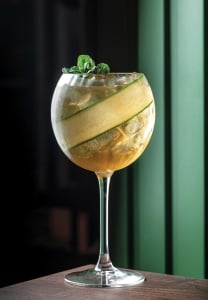
Cucumber ribbon and mint in a spritz cocktail.