

If Walls Could Talk
How material, motif and imagination transform the walls around us.
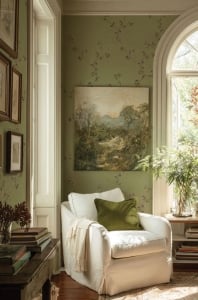
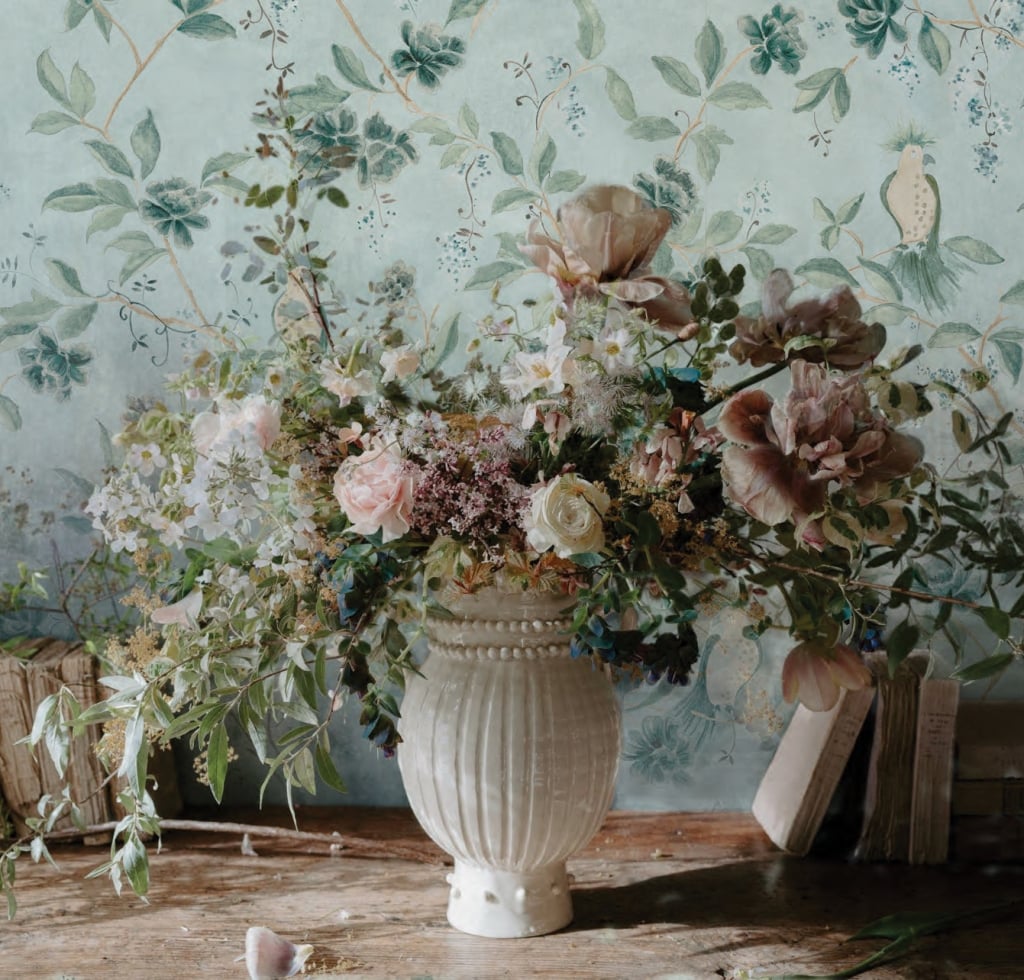
Hand-painted wallpapers by Lucy Hunter.
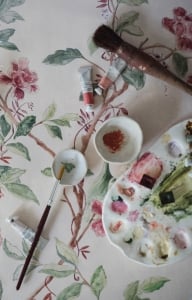
Walls were once simple dividers, structural necessities that defined where one room ended and another began. Today, they are anything but passive. Wrapped in silk, burnished in leather, sculpted in plaster or layered in hand-painted murals, walls have become the emotional architecture of a space.
Across the design world, walls are reemerging as immersive canvases rich with texture, heritage and imagination. Wallpaper, stucco, fabric, metal, glass, leather and even recycled materials are being reinterpreted through inventive applications. The result is not ornamentation for its own sake, but expression.
“People have been covering their walls with patterns and drawings for millennia. The first notable wall coverings were painted on silk by the Chinese in the 17th century as a decorative way to insulate walls,” says Lucy Hunter, a British artist who hand-paints luxury printed wallpapers and panoramic mural designs inspired by the natural world.
While mass-produced, peel-and-stick wallpapers are readily available at most retailers, tailored wall coverings center on highly customizable offerings crafted by hand. Many draw inspiration from the timeless style of America’s Gilded Age roots.
LAYERS OF LEGACY
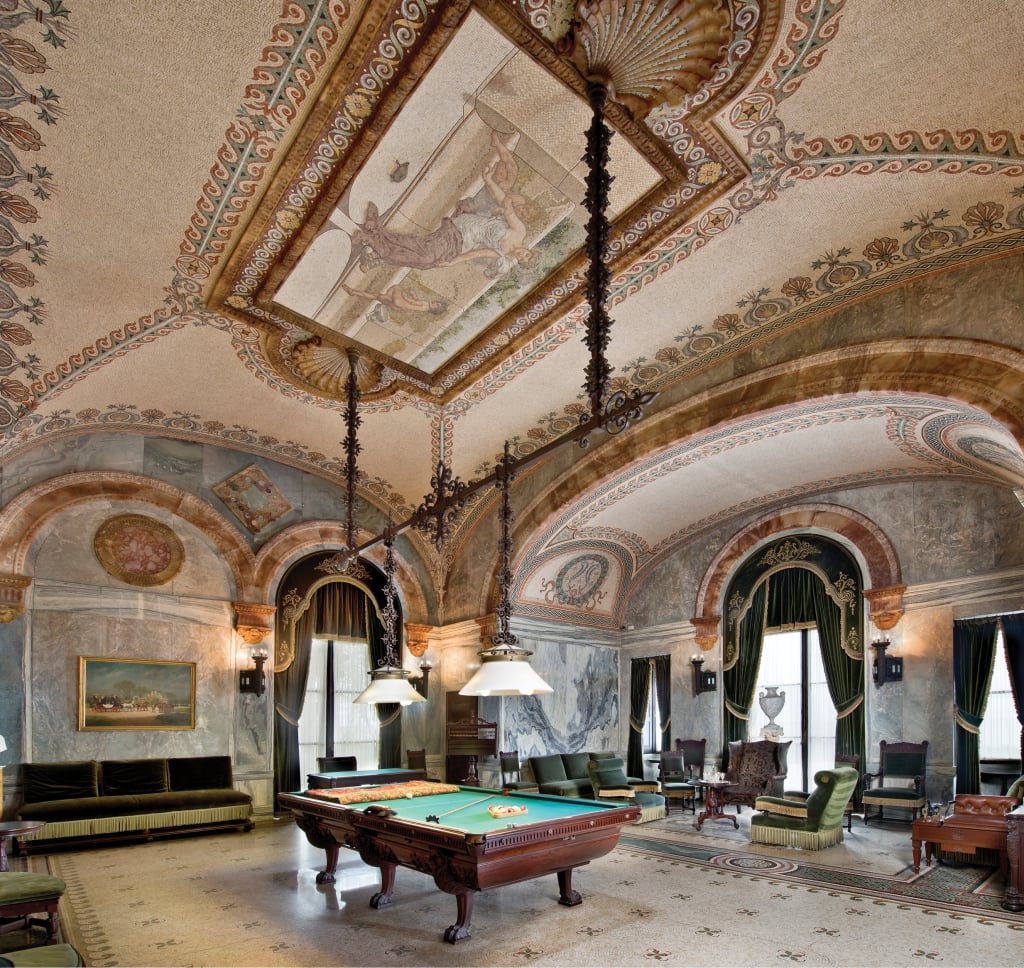
Billiard room in a Newport Mansion.
Spanning the 1870s to the early 1900s, the Gilded Age marked an entryway into modern society as we know it. Focusing on art as inherently beautiful without necessarily needing a deeper meaning, the aesthetic movement continually proves an integral part of contemporary design.
“This historic time period was a culmination of the Industrial Revolution, where everything was becoming more processed through machinery,” says Leslie Jones, Chief Curator and Director of Museum Affairs at the Newport Mansions Preservation Society.
Draping luxurious fabrics, particularly French-made silks or Italian linens, became a declaration of pride in a home. The textiles were not only of high value to import, install and maintain, but also provided a sense of warmth in cold climates before the advent of heating.
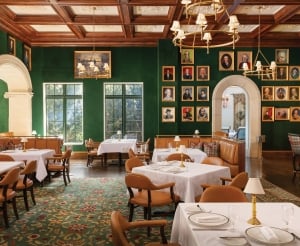
Velvet walls in Georgian Rooms at Sea Island.
Walls, then, signaled both status and discernment. Homeowners reimagined earlier methods—think plaster, limewash or classic millwork—as the desire for craftsmanship grew. “Wall surfaces in particular were looked at as a space framed,” Jones continues. “It became its own work of art the way the walls were treated in a home.” As a result, these opulent wall coverings soon conveyed a strong sense of poise, sophistication and artistic intention.
Perhaps one of the most unique examples can be found among the Newport Mansions, particularly inside the Marble House. This home was built between 1888 and 1892 and the crystalline marble interior exudes an ethereal elegance.
Just as tastemakers of the Gilded Age repelled the generic look from industrial machines, Jones anticipates a resurgence in demand for one-of-a-kind wallcoverings, particularly in the era of artificial intelligence. “We’re seeing a desire in the contemporary market for things to feel more unique and specific to a space, rather than just a part of this larger, easily accessible trend.”
DESIGNED FOR DREAMING
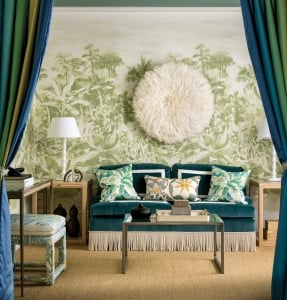
Printed mural by Kravet.
Fast-forward to the present day, walls have become the beating heart of any room. The world of 21st-century wall coverings is overflowing with options of textures, patterns and symbols. With more and more options available to consumers each day, historic methods lend themselves to inventive techniques as designers seek balance between the old and the new.
“It’s amazing to see how design sensibilities from a hundred years ago still resonate,” says Tiiu Kardi, Associate Director at Schumacher, a 135-year-old American design house specializing in luxury fabrics, wallpapers and furnishings. “We love innovation, but also value handmade and traditional methods, such as surface painting.”
Unlike smooth paint, surface painting responds to the environment. Run your hand across a limewashed wall, and it doesn’t feel flat. In the morning light, Venetian plaster appears matte and quiet. By dusk, it deepens. The wall shifts with the day.
NATURAL WALLS
Walls are, by definition, boundaries. They contain, define and enclose. Yet, in the right hands, they can do the opposite.
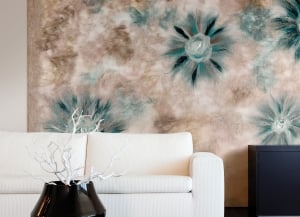
Wool and silk covering by Laurine Malengreau. Image courtesy of Artelier Art Consultancy.
Working hand-in-hand with private collectors, developers and designers, Artelier’s “Artist Walls” collection evokes diverse cultural influences, which is something a simple coat of paint can only hint at. Laurine Malengreau, a Belgian textile artist, combines natural wool and silk fibers to craft wall coverings that capture the soft, ever-changing semi-translucent interplay of natural light. Sculptor, Peter Hayes, expands sustainably made traditional Japanese raku ceramics into powerful walls, connecting the indoors to the natural world with the organic use of earth clay, fire and water. Mark Evans introduces intricately hand-etched leather panels, creating remarkably photorealistic images. Meanwhile, Jennifer Newman layers crushed minerals and natural pigments in her sweeping murals to enhance geological landscapes with depth and texture.
These large-scale designs and scenic wall coverings rooted in nature fundamentally shift spatial perception within a room. Design experts note that panoramic wall treatments have the ability to make a room feel larger and more cohesive by visually extending its boundaries beyond the physical wall itself and into the surrounding environment. Rather than acting as a hard stop, the surface becomes a subtle invitation for the eye to travel further.
Landscape murals in particular can create the illusion of depth, adding a layer of dimensionality that evokes a sense of connection and culture. In smaller interiors, this technique is often used deliberately to make a space feel visually expanded rather than confined.
There is also a psychological layer at play. Designers who focus on nature-inspired interiors have long observed that visually connecting indoor spaces to outdoor elements enhances ambience and comfort. When a wall mirrors the landscape beyond it, whether through botanical imagery, horizon lines or tonal palettes drawn from sky and water, the room feels less enclosed and more open to its surroundings.
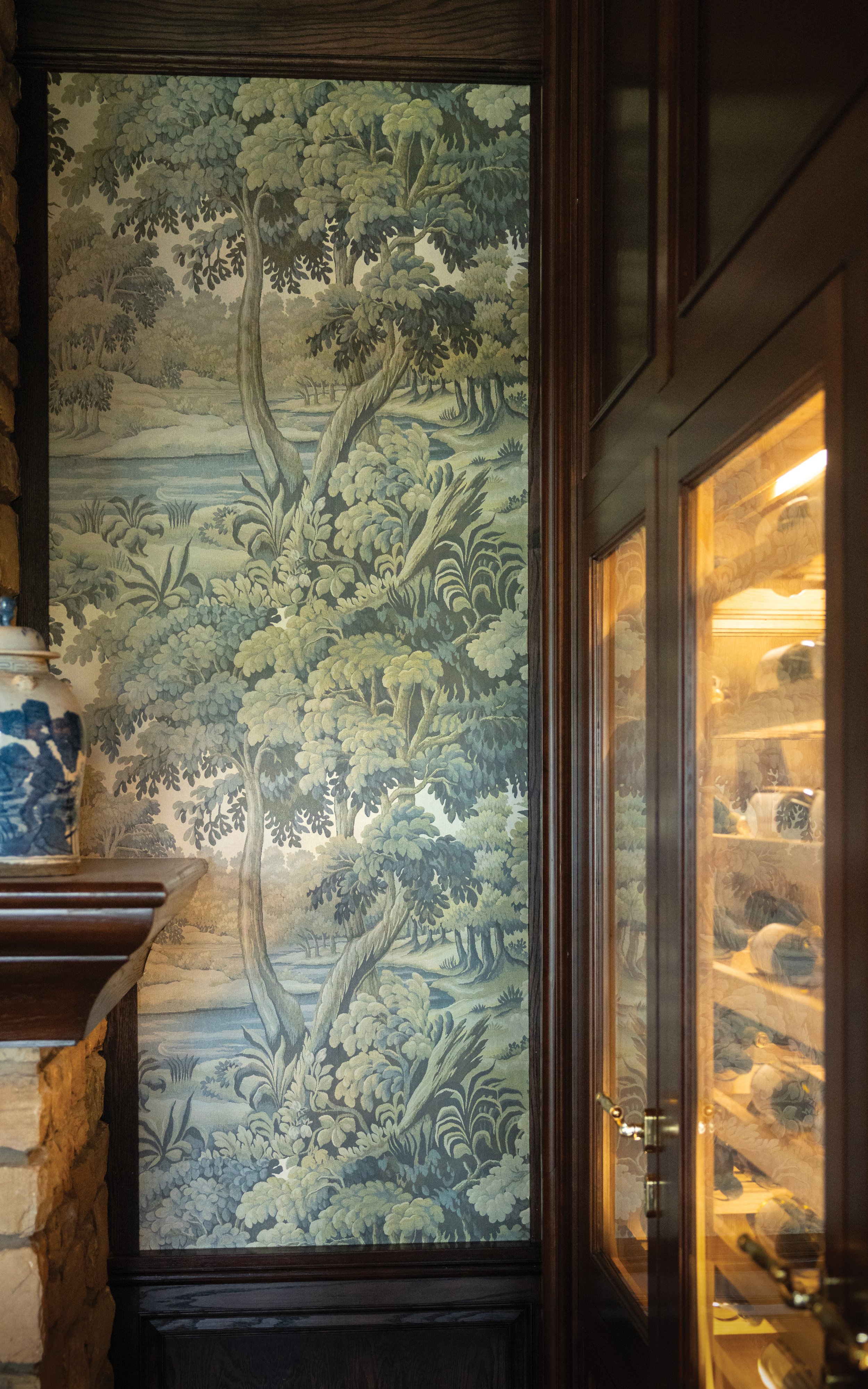
Wallpaper in Colt & Alison at Sea Island.
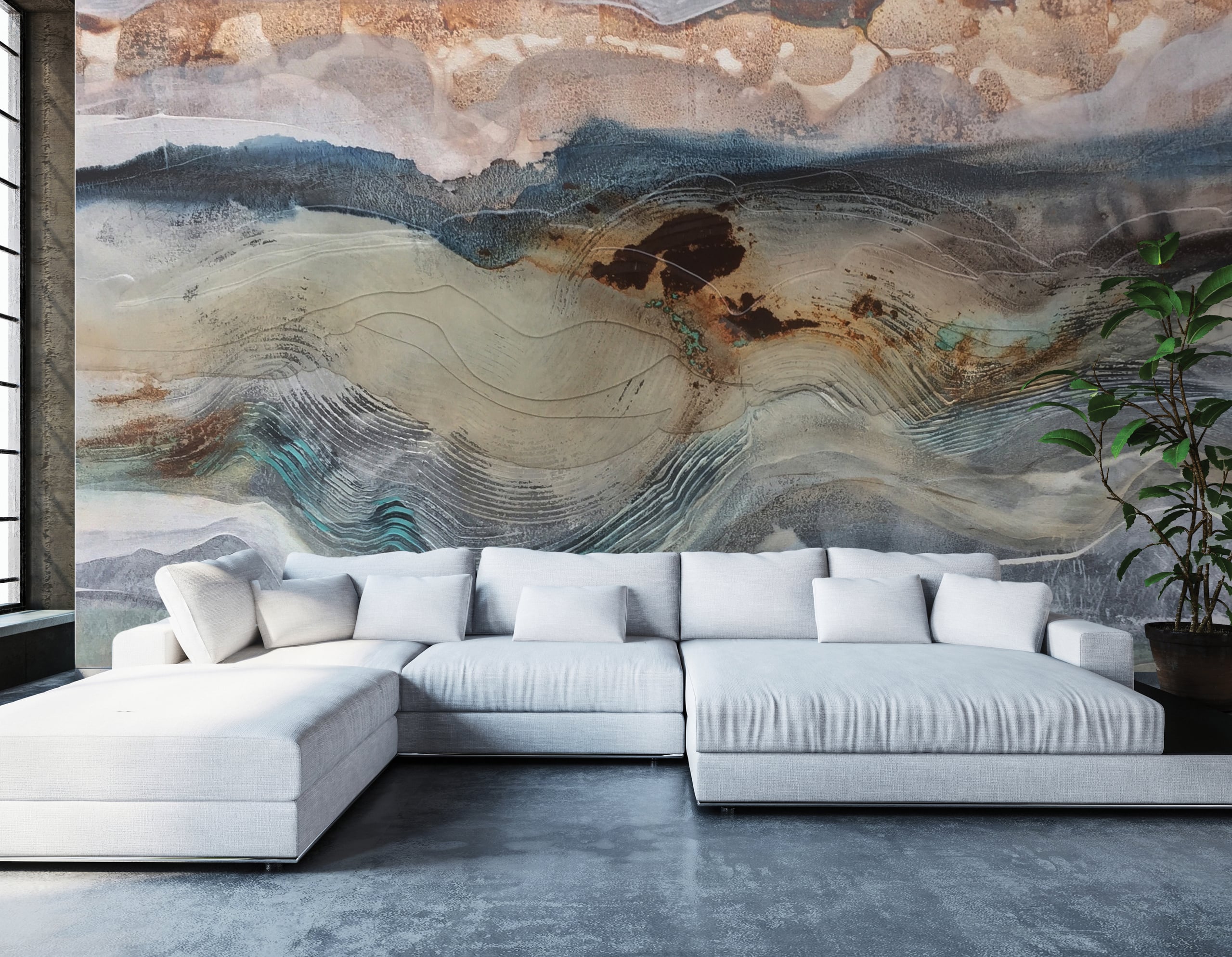
Raku ceramic coverings by Peter Hayes.
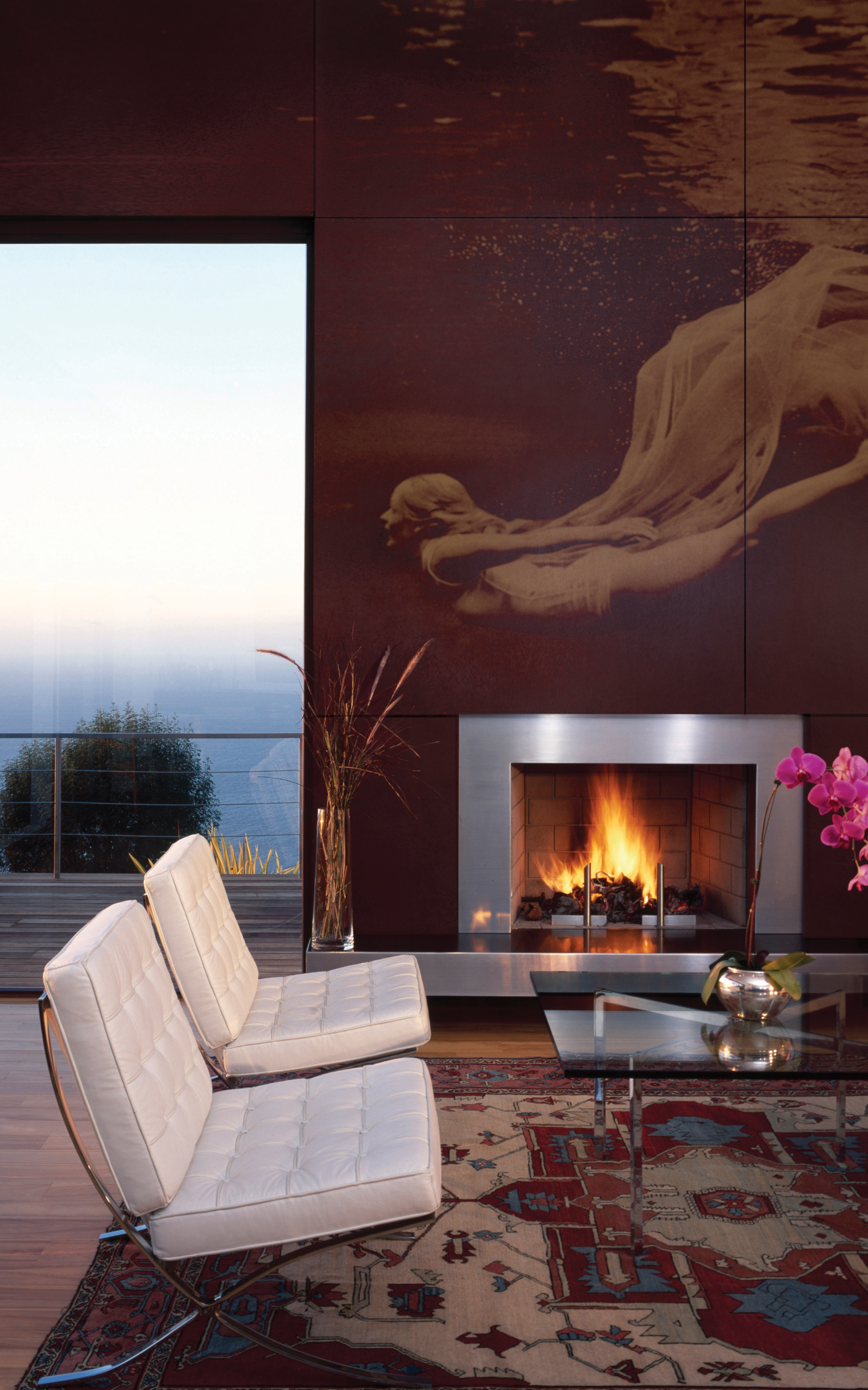
Etched leather coverings by Mark Evans.
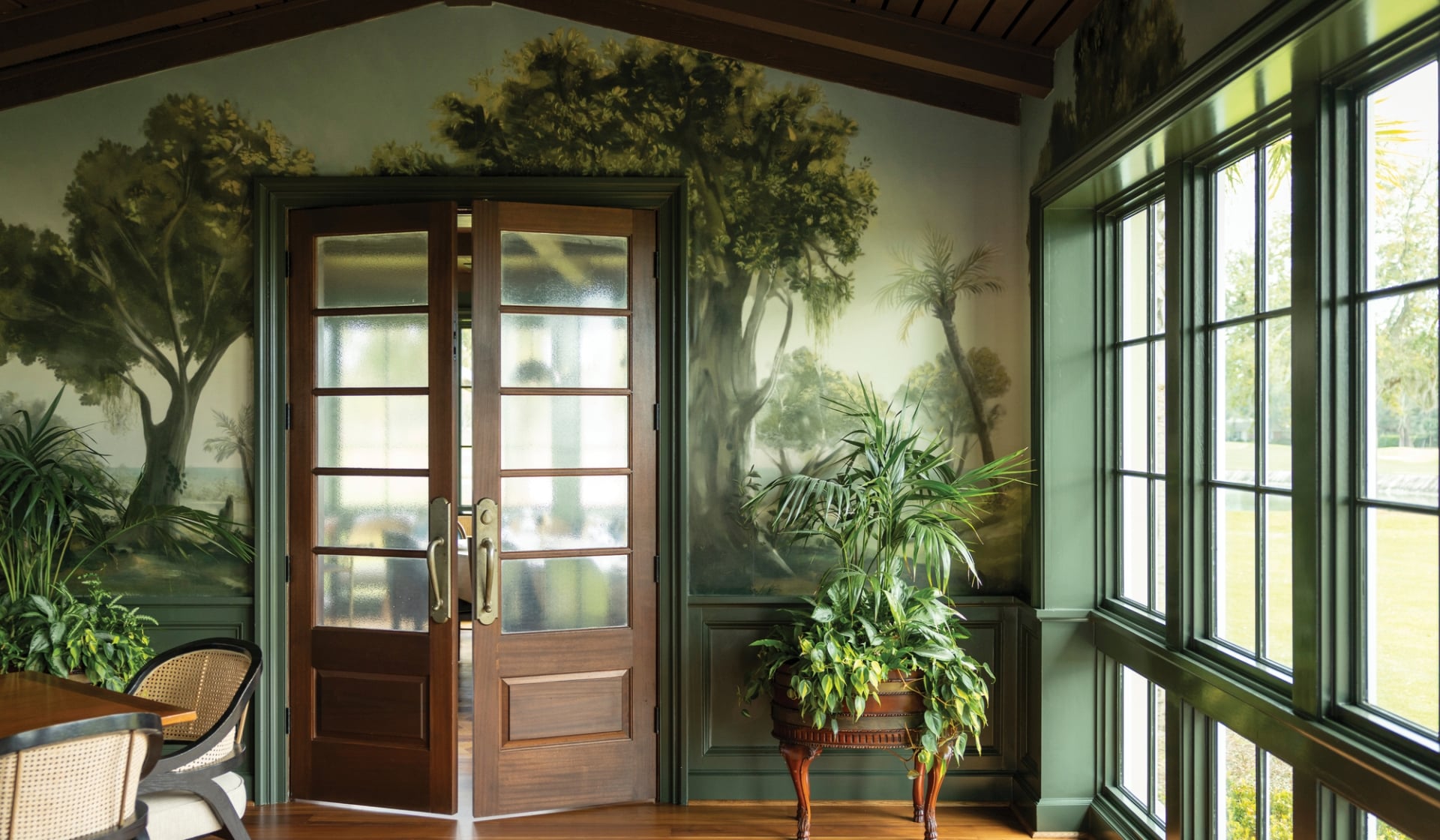
At Sea Island, this interplay between art and architecture is not accidental. A mural of hand-painted palms welcomes guests into Southern Tide, scaled in a way that mirrors the height and movement of the palms just beyond the oceanfront windows. The vertical lines lift the focus upward, subtly extending the room.
In Georgian Rooms, a delicate painting of flora and fauna is tucked into a recessed alcove, adding depth to the wall itself. What might otherwise read as a flat surface becomes layered and dimensional, making the private dining space feel more expansive. The most striking example can be found at The Lodge. Inside the Oak Room veranda, a 360-degree pastoral mural surrounds guests in a landscape before giving way to the real horizon visible through the windows.
The range of natural fibers readily available continues to expand. Sisal and seagrass introduce coarse, woven patterns, where bamboo panels often provide a structured interest while maintaining an organic appeal. Unique coverings such as foraged feathers, nature-inspired motifs and wood relief sculptures have all proved themselves prominent voices of this movement.
The inherent beauty of the natural world will remain, and organic coverings carry a sense of continuity with the outdoors.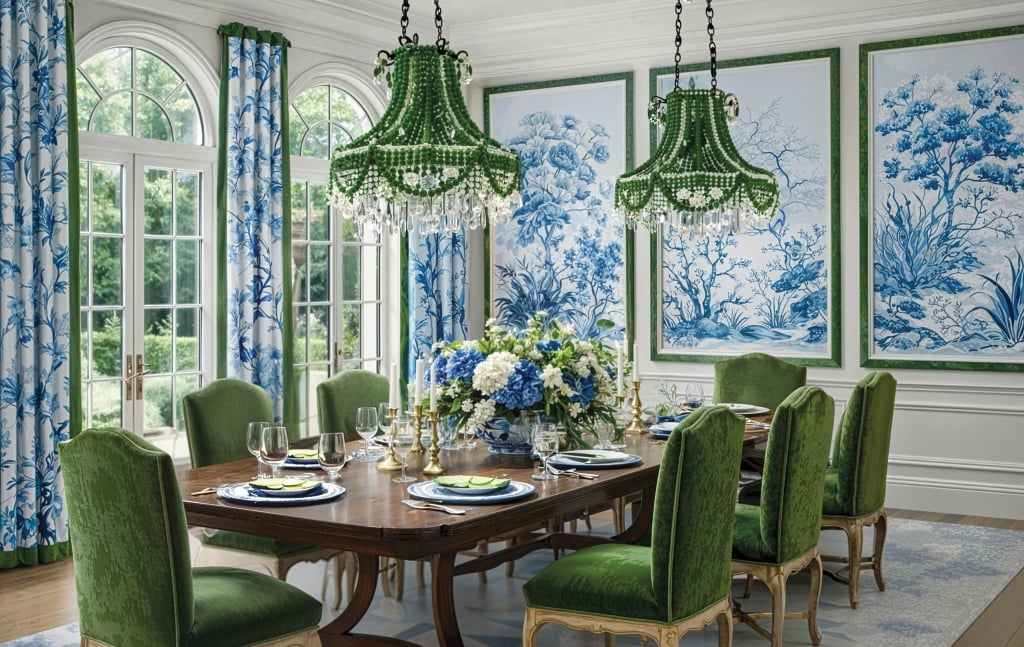
LANDSCAPE THROUGHT A LOCAL’S LENS
Many of the hand-painted murals found across Sea Island share a common thread: the work of local designers and artists who understand the landscape as well as the architecture.
Among them are Adrian Cate and Bethany Vann of Johnson Vann Interiors, a St. Simons Island–based design firm known for its work throughout the Golden Isles. The firm has contributed to several projects across Sea Island, including spaces within The Cloister, Beach Club, The Lodge, Ocean Forest Golf Club and The Cloister Solarium, where decorative murals and painted finishes help bring the surrounding environment indoors.
Their approach often begins with observation. Palms, marsh grasses and coastal skies become visual references that quietly inform the rooms they design. Rather than overwhelming a space, the murals are meant to complement architecture and views, echoing the natural rhythms of the island.
“Murals work best when they feel as though they’ve always belonged to the room,” Vann noted in discussing the firm’s work. That philosophy has guided their projects not only at Sea Island but also in private homes throughout St. Simons Island and the broader coastal region.
THE BESPOKE REVIVAL
A life story as it’s constantly reflected in the walls around them. Storytelling leads the way in how people decide to decorate their homes, and rooms layered with these unique wall coverings will naturally speak of a curious life well-lived. A thought-out interior offers stability, and emerging application techniques are redefining the possibilities of modern design.
Advances in digital printing and luxury woven textiles have dramatically expanded what is possible in the crafting of wall coverings. Historically, patterned wallpapers required labor-intensive block or screen printing, which limited both customization and scale. Today, digital rendering and custom printing allow designers to create highly personalized wall coverings sized precisely to a home’s dimensions.
People crave spaces enveloped with wall coverings that offer beauty as well as resonance. Homeowners are increasingly expressing this desire through custom artwork, integrated directly into their home with artistry-backed stucco finishes. These walls become tactile canvases, revealing a unique visual narrative.
As Sara Zigman, Owner of Sarabeth Bespoke, observes, “We spend so much of our lives in our homes. Having a space that accurately represents who you are is paramount. The more a space makes us feel like ourselves, the happier we are.”
Designs that once required extensive hand-sketching and guesswork can now be visualized digitally with remarkable detail before a single brushstroke or roll of wallpaper is applied. Patterns can be scaled to match ceiling height, palettes adjusted to respond to natural light throughout the day and across seasons and imagery refined to reference the architecture or landscape surrounding a home with greater intentionality.
Local interior designer Liza Bryan has worked on multiple properties across Sea Island. Looking ahead, she anticipates an exciting return to warmth and authenticity after years of sleek minimalism.
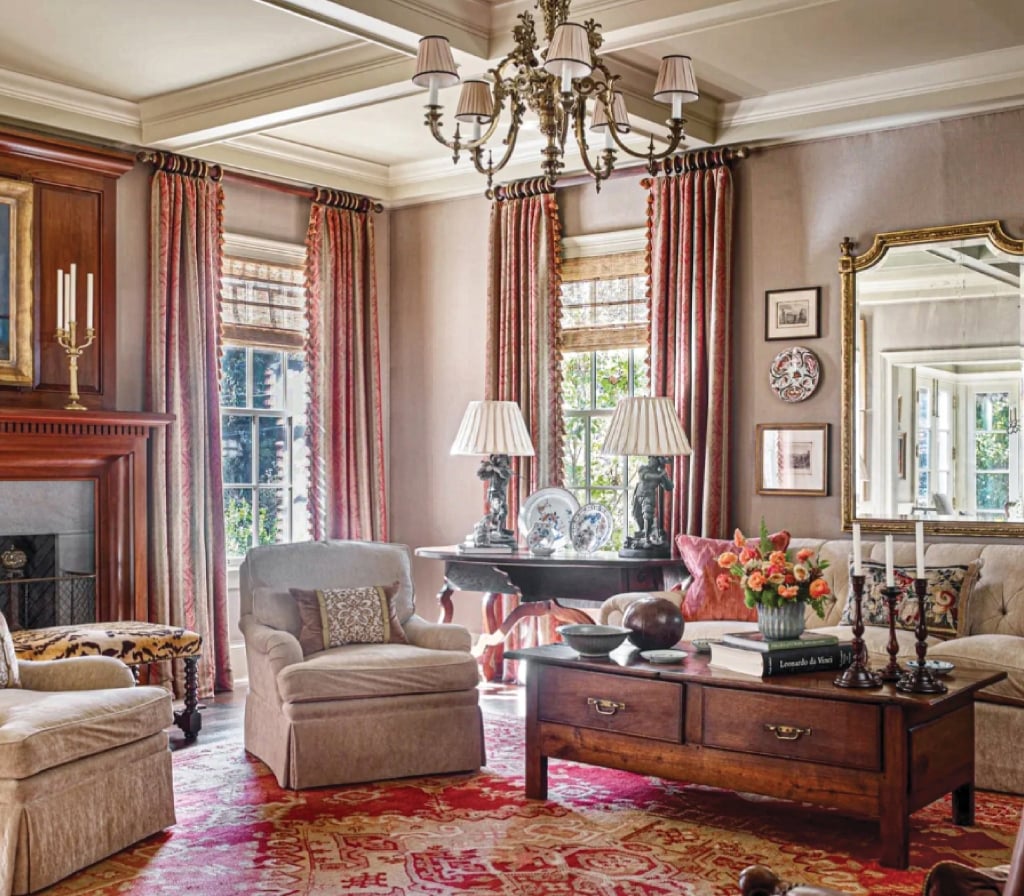
Interior designed by Liza Bryan.
“Technology, craftsmanship and global access mean designers now have so many things available at their fingertips,” Bryan says. “Each project can be tailored to individual lifestyles and tastes. No longer does one size fit all.”
With this growing consumer accessibility, a heightened desire for distinction is born. Permanence has become the highest achievement in an age of constant digital influence, where inspirational images circulate endlessly across social feeds, and trends seem to rise and fall overnight. When walls become pieces of art, they stand the test of time.
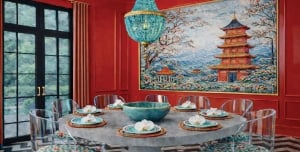
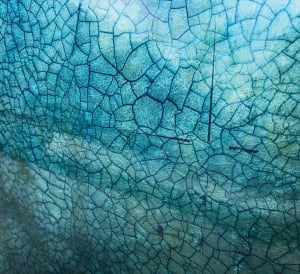
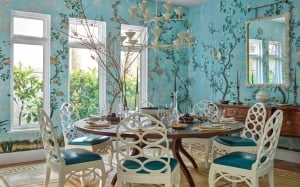
Dining room designed by Sara Beth Bespoke (left); Raku ceramics by Peter Hayes (center), Dining room designed by Johnson Vann (right).
Designers strive to work directly beside their clients, ensuring their voice is heard and uplifted during every stage of the creation process. “First, we must have a conversation about the project,” Bryan explains. “This is often when the house ‘speaks’ to me. We establish hopes and desires, and it becomes my job to thoughtfully interpret those into something tangible and lasting.”
Increasingly, those conversations lead to wallpaper designs rooted in personal meaning. “While aesthetics always move in cycles, I believe the shift toward handcrafted interiors is rooted in a deeper, more collective desire,” explains Zigman. “People are craving authenticity in their spaces, and that feels like a lasting change.” Glass walls have become a popular trend to reflect this personalized touch as they can be etched, frosted or tinted to encourage harmony and individuality.
“Beyond technology and technique, the most successful wall coverings,” Zigman says, “are the ones that feel inevitable—as if they could only exist in that specific home.”