



Night Watch
Trade secrets from the animal kingdom’s graveyard shift.
Fennec Fox
As the moon begins to rise into the evening sky, humanity knows the drill. Marching to the beat of circadian rhythm, the last meal winds to an end and fading daylight puts us to bed with the promise of rest and renewal. But for much of the natural world, the party is just getting started.
More than three thousand species — over 70% of all mammals — are nocturnal, instinctively operating under the cover of night rather than the light of day. A multitude of factors lead to a species’ preference for darkness: the safety of shadows, relief from heat and even avoidance of competition for food sources can drive a population to the night shift.
No species becomes nocturnal overnight. The environmental factors that push these animals towards change apply pressure over thousands of years, resulting in each species developing the exact survival solution necessary to thrive in its ecosystem.
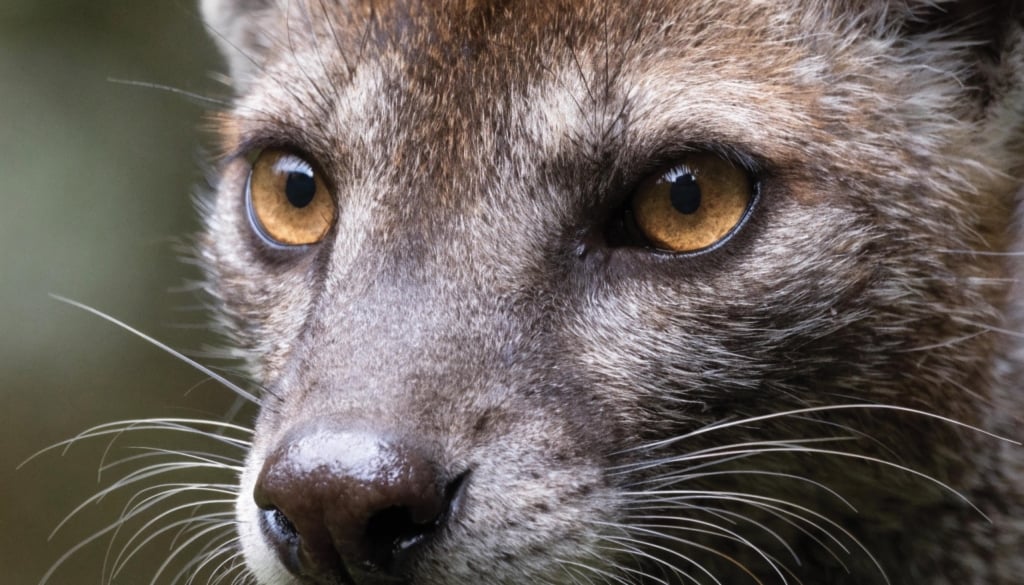
Kinkajou
Heard It Through the Grapevine
Absent of daylight, many animals rely on hearing to conduct their moonlit sonatas. These specialized ears can share many similar traits despite evolving independently across species. The flesh-and-cartilage exterior of the ear, known as the pinna, acts as a satellite to funnel sound waves to the inner ear for auditory processing. Many nocturnal animals that rely on their sense of hearing have developed sizeable pinnae to more effectively capture the sounds around them.
Aye-aye
Native to grasslands and savannas, the bat-eared fox is a prime example of being all ears. It can swivel either ear independently to better pinpoint the origin of a sound — a helpful level of control for an animal whose primary food source, termites and beetles, prefers subterranean travel.
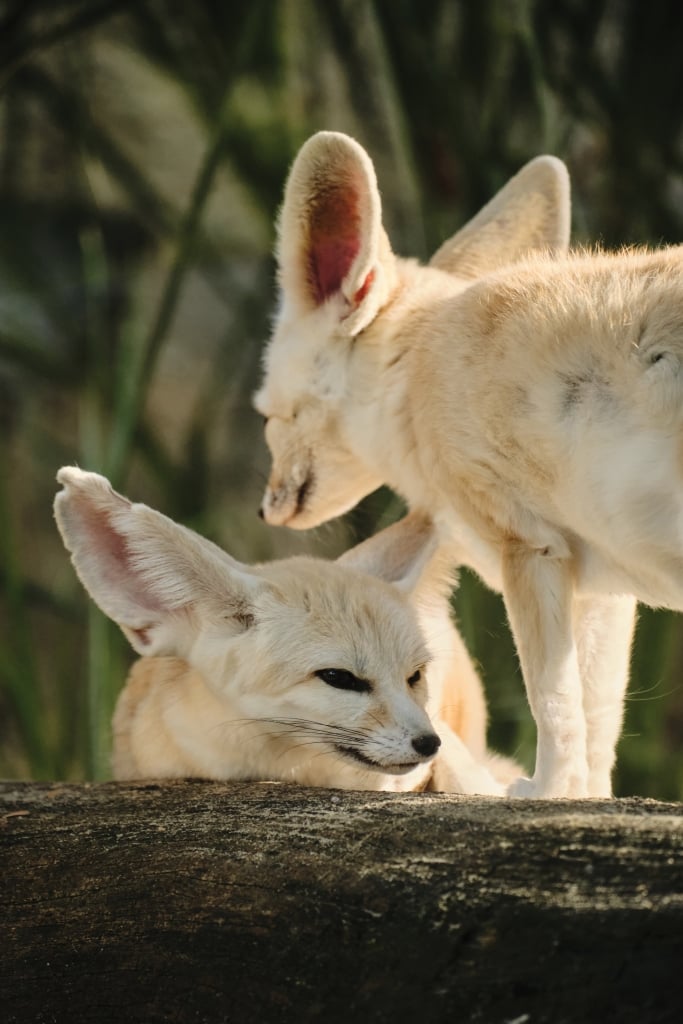
The fennec fox also utilizes large ears, but to greater advantage than hearing alone. A desert native, this fox frequently faces daytime temperatures upwards of 100oF.
The surface area of its ears not only serves to catch the slightest noise, but also allows the fox to efficiently dissipate heat for much-needed thermoregulation.
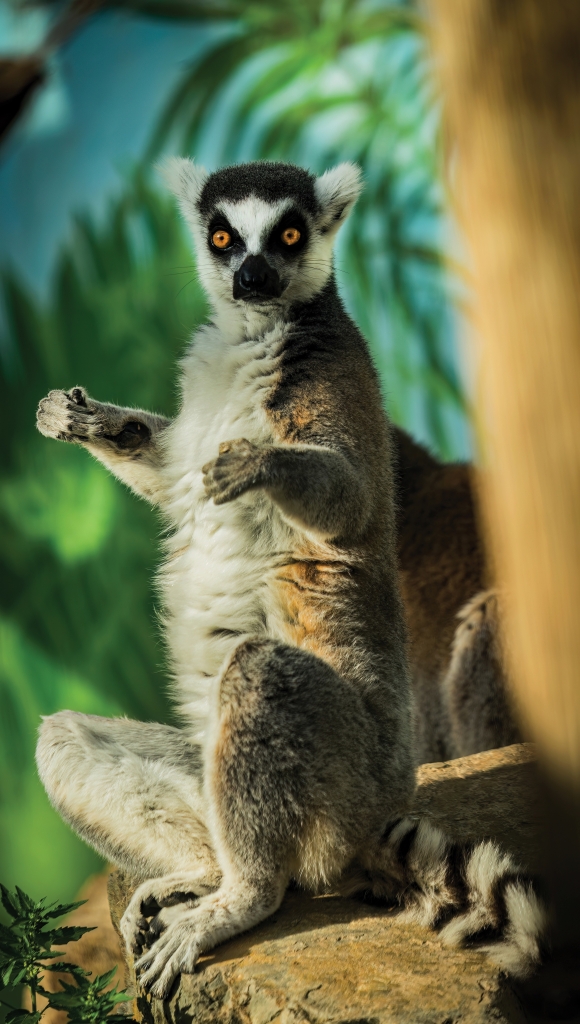
In Madagascar, the aye-aye takes a more hands-on approach. This primate uses its prominent middle finger in tandem with its ears, knocking on tree branches to then listen for the tell-tale scuttle of wood-boring insects. Once it finds a hollow space where insects have congregated, it gnaws through the bark and uses that elongated finger to fish out its meal.
A Touchy Subject
Under the shroud of darkness, navigating the physical world becomes a tangible act. Anyone who has blindly walked along a wall or a piece of furniture to find the bathroom at two in the morning can appreciate the sophisticated tactile navigation that many nocturnal animals employ. These travelers rely on a range of touch-based clues, ranging from environmental landmarks to density and moisture levels of soil and beyond.
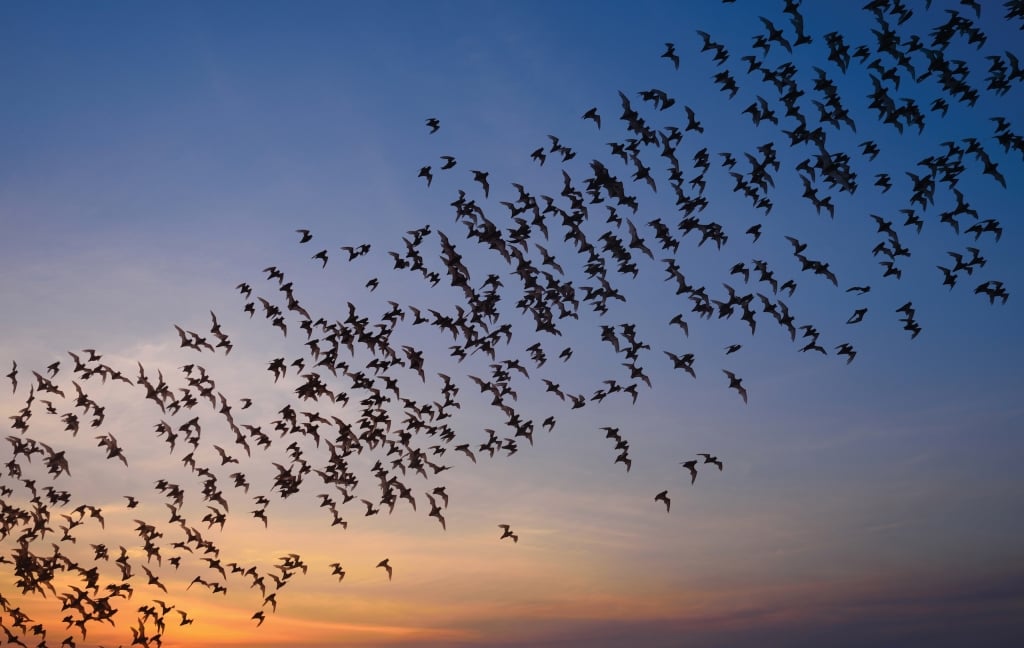
Northern Yellow Bat flight at dusk.
The star-nosed mole spends its life underground, entirely separated from the sun by a healthy coating of earth. No matter to the mole; it has its own stellar navigational system. Its namesake nose is completely one-of-a-kind and possesses 25,000 sensory receptors with which it orients itself in the earth. For comparison, the human hand contains only 17,000.
There is no better representative for the amphibian delegation than the Texas blind salamander. Native to a narrow region of central Texas, this salamander does not venture beyond the cool, water-filled caves of its motherland. While it does technically possess eyes, they are vestigial, having lost their original function over the course of evolution. In its current sightless state, the salamander hunts by sensing changes in water pressure made by the movement of its prey.
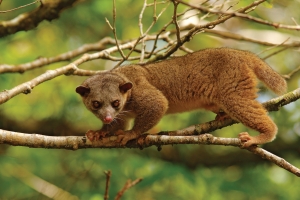
The kinkajou, a primate found in rainforest canopies across Central and South America, utilizes a prehensile tail to deftly navigate the branches for fruit, flowers and insects after nightfall. This ‘fifth hand,’ coupled with remarkable flexibility in its wrists and ankles, grants the kinkajou incredible dexterity as it journeys the treetops for its meal.
Sight for Sore Eyes
While the darkness of night seems unnavigable to us, other species have evolved hardware and devised methods to traverse the night with ease.
Bat-eared Fox
In the warm northbound current along the eastern coast of the Americas dwells an animal that has existed before the continent was formed. Estimates of the horseshoe crab’s origin place them comfortably at 350 million years old, with the most ambitious dating them back 450 million years. Don’t let their helmet fool you — these arthropods have multiple pairs of eyes to synthesize various forms of light. One set of eyes is sensitive to polarized light, while another senses ultraviolet rays and others still serve to orient the crab in the water.
Chuck-will’s-widow
Stranger still is the groundbreaking celestial navigation of the bogong moth. New research from the Australian bush indicates that these moths are the first insect species to migrate while relying on stars for their heading. Each spring, the species migrates en masse to the Australian Alps, traveling as far as 600 miles to the southeast to spend the hottest part of the year tucked into cool mountain caves. When they emerge, they follow the stars back home and pass the stargazing to the next generation.
Southern Flying Squirrel
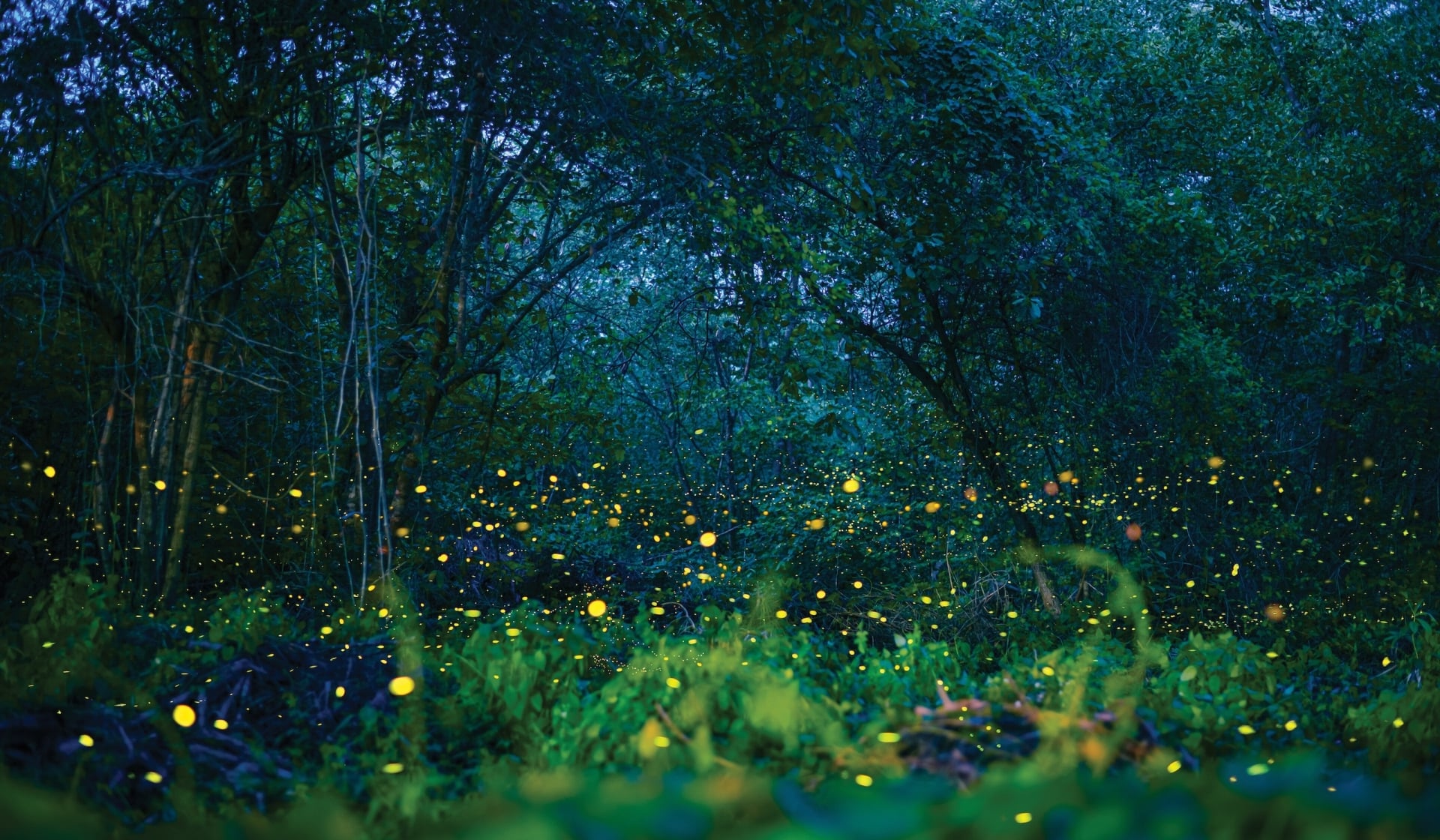
Not to be outshone, the firefly famously creates its own emissions of light to communicate. As the sky dims, these beetles illuminate from within, putting on a glowing performance to attract mates. The patterns with which they light themselves differ by species, gender and even the bug’s intended message.
Mother Nature Nose Best
Already a powerful guiding force in daylight, a strong sense of smell becomes critical when a creature flies by night. Homo sapiens can only imagine the information that other animals receive by scent. While humans have about six million olfactory receptors, an average dog’s nose contains 125 million.
Sea Island After Dark
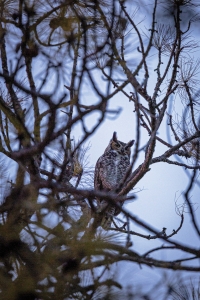
Great Horned Owl
Standing on the shore at Sea Island, the sounds of the ocean are preeminent. The further you recede from the tide, though, the sounds of the island begin to shift. Under the glow of moonlight, a different kind of life takes over. Nine-banded armadillos rustle through the salt marsh in search of dinner. Overhead, Southern flying squirrels glide between iconic live oak trees. Above it all, Great Horned Owls supervise the night from the tallest branches of the pines, using their superior hearing and night vision to pinpoint their next meal.
Somewhere close by, a Chuck-will’s-widow may start to sing — and it may be nearer than you think. Most hear the bird long before they ever see it. The brown feathers help the Chuck-will’s-widow hide on the forest floor by day, and it takes flight by night to catch moths and insects. This bird’s elusive nature is still being unearthed. Birds Georgia and researchers at the University of Georgia use GPS tags and small recording tools to gather data about the bird’s movements and patterns.
The night may appear quiet at first glance, but the land is always in motion. Sea Island is beloved for its stunning beaches and bright sun, but its beauty only transforms with the fading of the day. If anything, darkness reveals another facet of the coast — gentler yet wilder, and all at once alive.

Horseshoe Crabs
The bloodhound has earned its seat among the sniffing elite. These dogs have around 800 functional scent genes and 300 million olfactory receptors — more than double the average across all canine breeds — and can trace scent trails through adverse weather and low light with incredible accuracy.
However, the world’s smelling champions cannot be discussed without addressing the elephant in the room. Both African and Asian elephants demonstrate sophisticated olfactory differentiation, utilizing more than 2,000 scent genes to forage when they are active at night.
Pheromones — chemical signals secreted by animals to incite behavioral responses in individuals within the same species — can travel through the air, settle on surfaces and remain long after their issuer has moved on. These signals can communicate any number of messages, from a call for a mate to a warning of grave danger. Silk moths are well-noted for their antennae’s sensitivity, able to detect mating pheromones from female moths as far as seven miles away.
A Shifting Landscape
Each of these species has found its niche over thousands upon thousands of years of trial and error. Recently, researchers have found that some species are making drastic adjustments to their behavior on humanity’s account. By reviewing 76 studies on 62 species across six continents, they documented that mammals were an average of 1.36 times more likely to be active at night when living near humans.
This finding highlights a fundamental truth of nature: animals respond to the environment around them. Some species, as evidenced, meet adverse changes by adjusting their waking hours and their hunting patterns around these intrusions.
The more scientists discover about the animals of this planet, the clearer the picture of darkness becomes. It is not an obstacle to circumnavigate or a foe to be conquered — it is an environment as requisite as daytime that countless species have harnessed and come to rely on for survival.