

On The Bag
Caddies as stewards of strategy, mentorship, and the game itself.
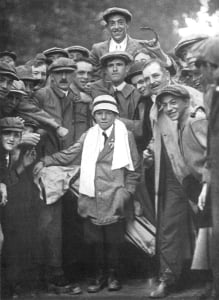
Eddie Lowery (middle) caddying for Francis Ouimet at the 1913 U.S. Open.
Caddies have long been the unsung heroes of golf—but given the game’s long history, it’s not surprising that the origins seem as foggy as a morning on the North Sea coast. The word caddie traces its origins to the French cadet, meaning boy or student-soldier, which evolved within Scotland to caddie or cadie in the early 1600s. At the time, the term encompassed a range of workers who performed odd jobs. According to golf historians, it wasn’t until 1681 that Andrew Dickson earned the honor as the first named caddie, toting clubs for the Duke of York on Leith Links and helping him find the pricey featherie golf balls used at the time.
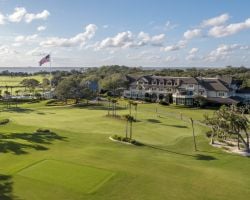
The tradition of caddies at Sea Island Golf Club dates back to the founding in 1928, and nearly a century later, they remain an integral part of the golf course experience, carrying knowledge, strategy and tradition.
Justin Bickmore, Sea Island Caddie Master, is responsible for overseeing a staff of about 45 full-time caddies, with another 20 who are part-time and as many as 40 on-call depending on the season. “Add them all up, and it comes down to making sure all Sea Island members and guests have their caddie needs met,” he says. Caddies range from 17 to 80 years of age. and come from all walks of life. For some, it’s their profession, while others are going to school, have just gotten out of the military or are passing through until they are onto the next thing. Many are locals, but the reputation of Sea Island attracts aspiring caddies, also known as loopers, from across the country.
Facing a constant flow of golfers with different needs and experience levels, a caddie master’s job is a bit like putting together a puzzle. “We plan everything according to the tee sheet, and execute based on that,” says Bickmore. “If there is a need for 60 loops tomorrow, we’ll make sure we have 60 caddies. My job is to guarantee that everybody who would like to have a caddie will have one by their side.”
Selection for the Sea Island caddie program is rigorous. Candidates go through two interviews before they can proceed to the training stage. Caddie Boot Camp generally entails five nine-hole sessions, including bag carry training and forecaddie training, and teaches applicants the script and standards to deliver a five-star service experience. “There’s no exact science to being a caddie on the golf course, but there’s a lingo and etiquette that you need to know,” says Bickmore. “You don’t have to be a scratch golfer, but if you’re knowledgeable about the game and enjoyable to be around, you can make it as a caddie.”

Davis Thompson, Sea Island Touring Professional, and Joe Etter, Sea Island Caddie, at The Open at Royal Troon.
Two Cart Paths Diverged
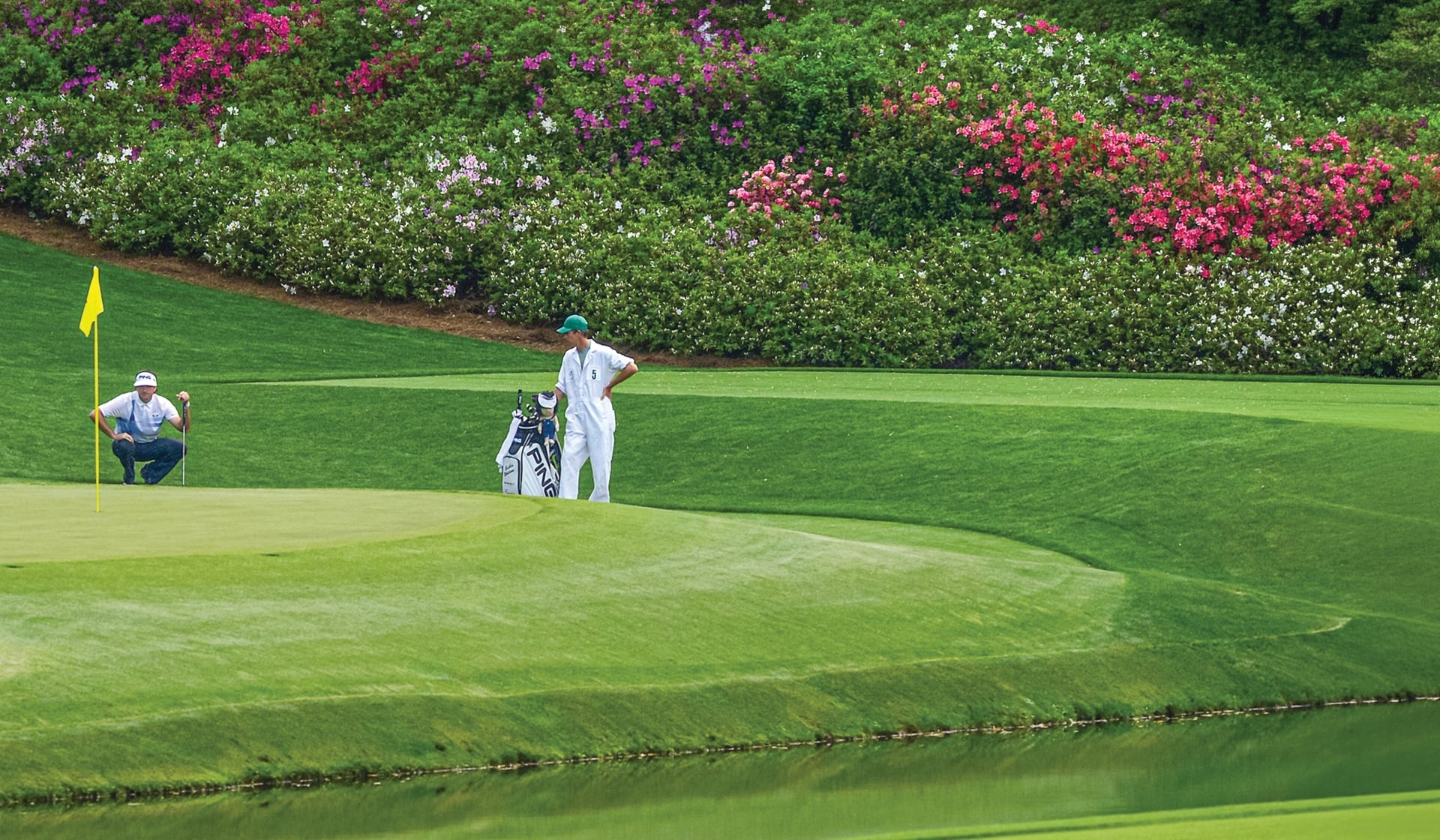
There are two types of caddies, walking caddies and forecaddies. For most people, what comes to mind first is the former, someone who carries a golfer’s bag and manages their clubs. Minus the bag-toting, a forecaddie’s responsibilities are similar: raking bunkers, tending flag sticks, reading putts, cleaning golf balls and filling divots. In addition, a forecaddie might be positioned out front on most of the holes to locate golf balls, calculate yardage and have that information ready to communicate as the players arrive. They handle all the tasks to ensure players can focus on a memorable round and maintain an enjoyable pace of play.
While walking caddies remain a traditional element at many private clubs, forecaddies have become increasingly common at resorts and high-traffic courses. According to the National Golf Foundation, green-grass golf participation in the U.S. reached more than 29 million on- course players in 2025. This reflects the growing demand for traditional golf experiences and on-course support like caddies and forecaddies. This trend has helped sustain the role of caddies and the connections they form with golfers, whether walking or forecaddying.
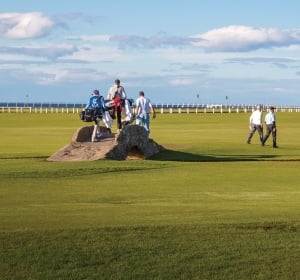
Golfers and caddies crossing Swilcan Bridge at the Old Course at St Andrews.
What’s in a Nickname?
You’ll often hear caddies called loopers—a nickname that’s famously cited in Caddyshack, when Carl Spackler, played by Bill Murray, reminisces about caddying for the Dalai Lama in Tibet. But, like the word caddie, its origins date back much further than a 1980 movie.
Starting in the 18th century, links courses, such as the Old Course at St. Andrews, were laid out in a long loop that began and ended at the clubhouse. On many modern courses, both the front and back nines create loops. So, the term “looper” isn’t just fanciful golf lingo. It’s a nod to the very shape of the game, and to the caddies who have been walking those loops for centuries.
From Course To Classroom
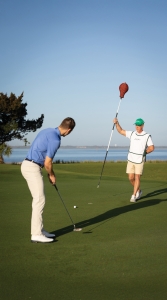
Sea Island Caddie
Cultivating the next generation of caddies has long been a vital part of the game, preserving tradition and opening doors for young people. One of the most impactful pathways is the Evans Scholarship Program. The program was founded in 1930 by amateur golf legend Charles “Chick” Evans Jr. and administered by the Western Golf Association (WGA). The scholarship provides full tuition and housing at partner colleges and universities to high- achieving caddies with limited financial means. This makes it one of the largest privately funded scholarship programs of its kind in the country.
Nearly 13,000 Evans Scholars have participated in the program in just short of a century, and in December 2025, Addison Seban became the first Sea Island caddie to earn a scholarship. A high school senior at Frederica Academy on St. Simons Island, Seban caddied over 80 rounds, maintained strong grades and successfully navigated the scholarship’s rigorous application process. “It was really exciting to hear the news,” says Seban. “I had to go through interviews, keep up my grades and balance my rounds on the course, but it was all worth it.” She plans to continue caddying while pursuing her studies in international business at the University of South Carolina.
“Everyone is proud of what Addison has accomplished over her three years here,” says Kel Goalby, Director at the WGA. “We have watched her grow in so many ways and can’t wait to follow her future endeavors. She is certainly deserving of the Evans Scholarship, and we’re thrilled that her hard work has paid off with this life-changing opportunity.”
Caddie programs such as the Evans Scholarship and similar initiatives, including the Francis Ouimet Scholarship Fund in Massachusetts and the EAGLE Caddie Program in Portland, Oregon, recognize that caddying is more than a job—it’s a pathway for personal growth. Through hands-on experience, mentorship and structured training, young caddies develop responsibility, leadership and practical skills while gaining access to higher education. Together, these programs highlight a broader trend in golf: preserving the tradition of caddying while preparing the next generation for success both on and off the course.

Jon Lehman, Sea Island Caddie, with Ruoning Yin after winning the 2023 KPMG Women’s PGA.
Local Links To Professional Ranks
On the other end of the experience spectrum, becoming a professional caddie is every bit as winding a road as earning your tour card. Some start on the developmental tours in the hopes that they can work their way up the ranks, while for others, it’s a matter of friendship or being at the right place at the right time. Austin Kaiser, a friend and teammate of Xander Schauffele’s at San Diego State, has been on his bag since he turned pro in 2015. Rory McIlroy’s caddie for the past 10 years, Harry Diamond, was a top Irish amateur and childhood friend. Ted Scott, who was at Bubba Watson’s side for 15 years and 12 PGA Tour titles, considered retiring in 2021—only to be scooped up by Scottie Scheffler.
For those at Sea Island with tour aspirations, the caddie program has served as a stepping stone to caddying in the professional ranks. “With a lot of mini-tour and PGA players in the area, it’s a great jumping off point,” Bickmore says while reeling off a list of Sea Island caddies who’ve made the leap.
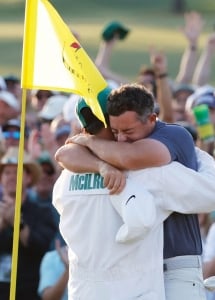
Rory McIlroy celebrates with caddie Harry Diamond after victory at the 2025 Masters.
Jay Green caddies for Steven Fisk, who notched his first pro win at the Sanderson Farms Championship in 2025. Cooper Wilson earned two wins on tour with Brian Campbell at the 2025 Mexico Open and the 2025 John Deere Classic. Jon Lehman, who started caddying at Sea Island in 2008, brought his talents to the LPGA, partnering with Ruoning Yin, winner of the 2023 Women’s PGA Championship. Joe Etter, who is currently caddying for Davis Thompson, has teamed up with players including Chris Kirk, Harris English and Patton Kizzire over the past 15 years.
Whether they move on to professional tours or continue looping at local clubs, caddies do far more than carry clubs. They help set the rhythm of a round—offering insight, encouragement and the occasional well-timed word when it’s needed most. In the end, that connection between golfer and caddie is what keeps the tradition alive. As Brannen Veal, Director of Sea Island Golf Club, puts it, “It is all about building that bond and that relationship.”