



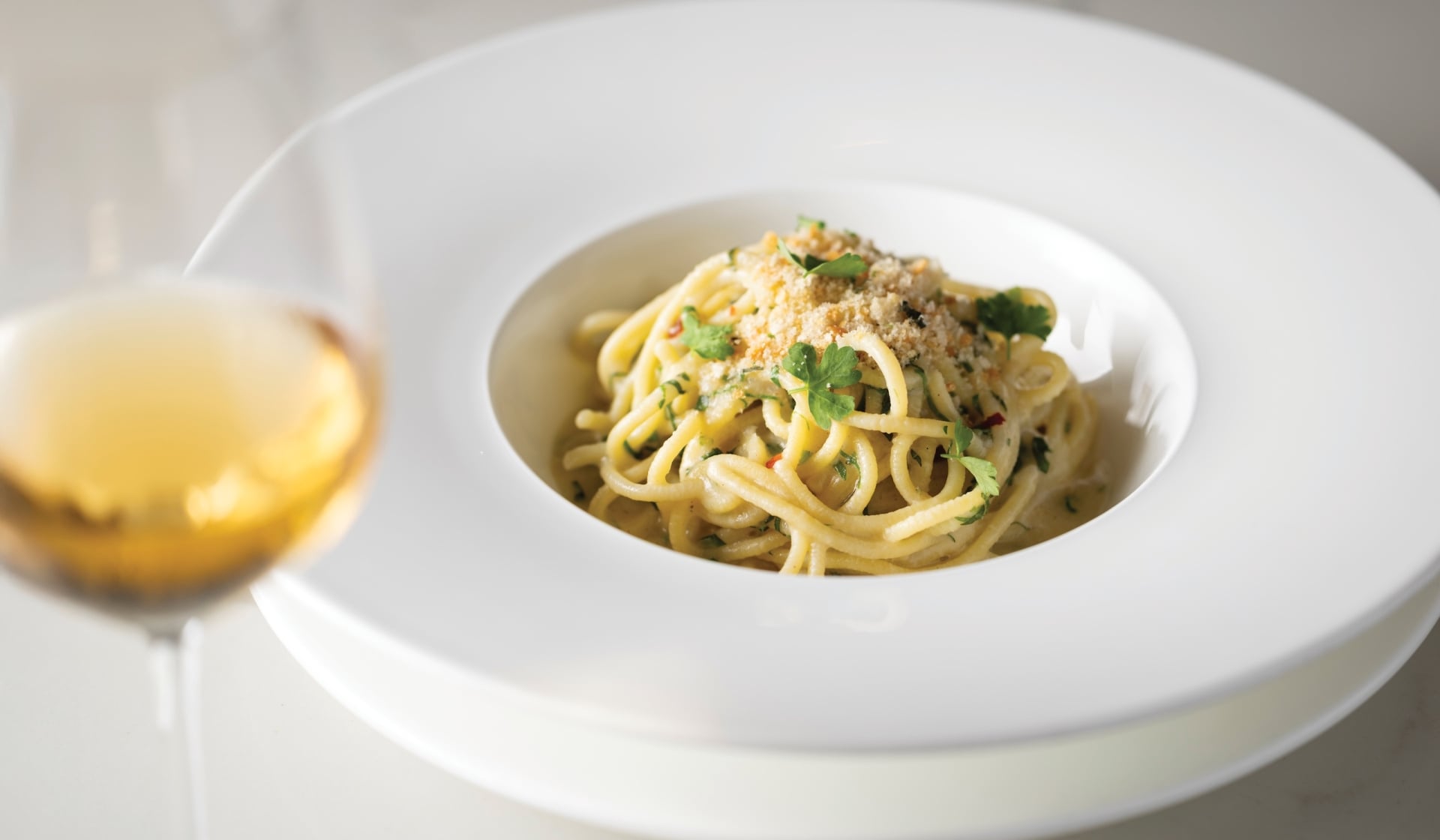
Pasta Perfection
Where history and geography meet to shape a classic Italian tradition.
Fresh pasta stands in Bari, Italy.
Hand-cutting fettuccine.
Wide pasta ribbons cradle rich ragu, while rigid tubes capture hearty sauces. Delicate spirals hold tiny bits of flavor, and beautifully shaped orecchiette scoop up small chunks of sausage. Every fold, groove and spiral tells a story about the people who created pasta and the lands that sustained them.
Few foods can transform such simple ingredients into a remarkable expression of culture. Italy alone boasts more than 350 documented pasta shapes, each created with purpose and precision.
“Italy has become the country most identified with pasta because it adapted a simple food to survive,” says Niran de Blasio, Executive Chef at Daniel Boulud in New York City. “For centuries, families made the basic dough with flour and water. They provided a source of food for centuries, but over time each region developed its own version, making changes to the shape and seasoning.”
What began as an inexpensive way to feed families gradually evolved into one of the world’s richest culinary traditions, with recipes passed from one generation to the next.
“It all starts with exceptional ingredients, but technique is equally as important as tradition,” says de Blasio, who grew up in Milan. “When you make pasta by hand, you feel the work of those who spent hours preparing the pasta. You feel the drying time. You feel when it’s cooked and cooked perfectly. You feel the sauce’s emotion paired with it. If the pasta is handmade, the sauce too is a whole other emotion. It’s not just nourishment; for me, it’s appreciation for the people behind it.”
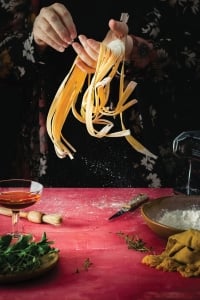
Flouring pasta to prevent sticking.
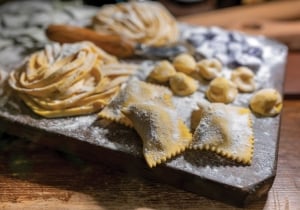
Fettuccine, ravioli and gnocchi.
Ancient Roots, Italian Identity
Pasta’s exact origins remain one of the culinary world’s longest-running debates. Although some credit Marco Polo for bringing Chinese noodles to Italy, many historians believe ancient Mediterranean civilizations were creating pasta long before that. The Romans, Greeks and Etruscans each had their own dough-based foods centuries before, and as time progressed, so did their culinary creations.
Arab traders later introduced new ingredients and techniques to Sicily, where durum wheat — a hard grain naturally high in protein — flourished in the warm, dry climate. Those influences blended with local ingredients and traditions, helping shape the pasta culture that would become synonymous with Italy.
Geography shaped pasta as much as history. In northern Italy, abundant dairy farms and poultry inspired rich egg pastas such as tagliatelle, pappardelle and tortellini, which were often paired with butter, Parmigiano Reggiano and slow-cooked meats. Southern Italy’s warm temperatures and ideal growing conditions for durum wheat created sturdy dried pastas made without egg that were served with olive oil, tomatoes, seafood and vegetables.
“The landscape is an important factor for ingredients,” de Blasio says. “We can see the pasta shapes of pansotti and trofie in Liguria, based on wild herbs and walnuts, or the classic ones with pesto. Then we can move on to Bergamo with the stuffed pasta casoncelli, made with meat or cheese, and then move south to the coast, where seafood and fish are used prominently.”
Even neighboring towns developed their own pasta traditions. In the coastal region of Liguria, Italy, where cliffs traditionally isolated people who lived even a few miles apart, pasta shapes and sauces vary considerably. Sori, which faces the sea, grows Genoese basil; a several-mile climb into the mountains, Recco’s shaded terrain is home to walnut trees and wild mountain greens. The local ingredients are made into sauces, which are served with the pastas that bring out their best flavors. In Sori, hand-twisted spirals called trofie hold the homemade pesto, and in Recco, thick walnut sauce covers flat triangular pockets of pasta known as pansotti. “You can travel just a few miles from one town to another and find the same pasta shape with a different name, a different filling or an entirely different sauce,” de Blasio says.
While many pasta shapes appear decorative, each was designed with a specific purpose. The small cup-like shape of orecchiette, for example, is perfect for holding small vegetables and olive oil-based sauces. Rigatoni’s ridges help capture thicker sauces, while wide, flat pappardelle provides a large surface area for a hearty bolognese ragu. Tagliatelle’s broad ribbons are also a perfect surface for a ragu, while fusilli traps small ingredients between its spirals.
“While each shape offers its own artistic presentation on a plate, pasta was never designed for appearance but to make each dish work better,” de Blasio says.
Jim Palmeri, Executive Chef at Mohonk Mountain House in upstate New York, says simpler shapes such as fettuccine became common because they were easier for families to make by hand. More intricate forms often remained tied to specific regions, requiring generations of practice to master.
“It speaks to food prep, what was at hand and what the person’s skill level was,” Palmeri says. “Some might have had olive oil easily at hand, while others couldn’t afford it and used water.”
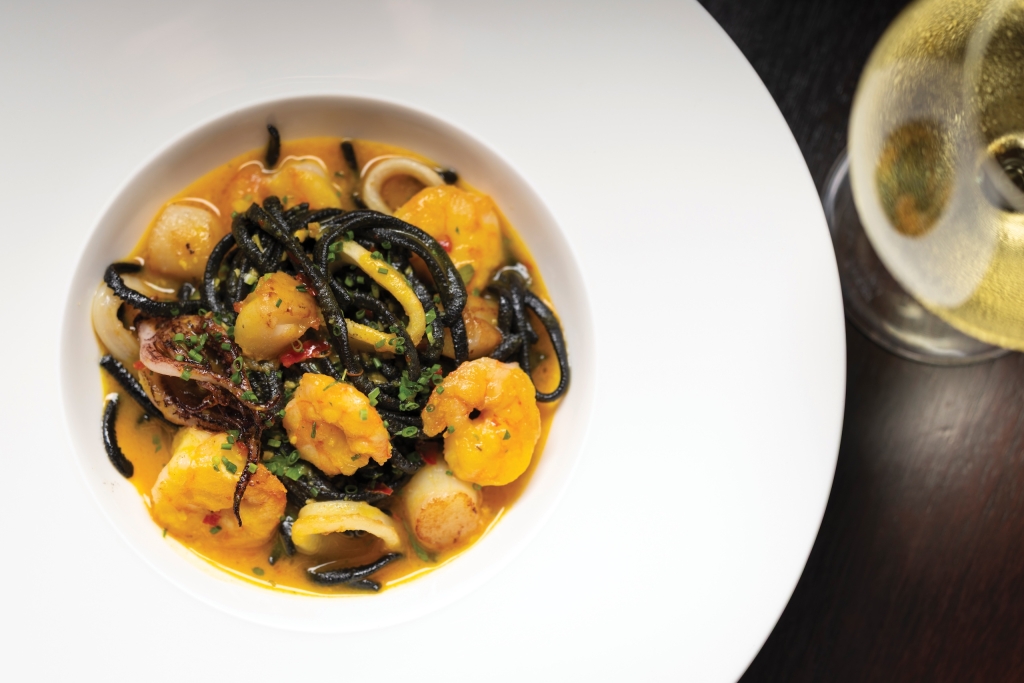
Nero di Seppia Linguini at Tavola
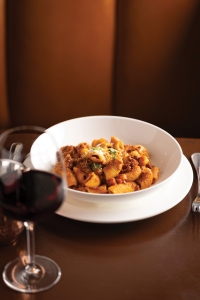
Rigatoni alla Bolognese at Tavola
Where Pasta Takes Shape
Every day at Tavola, fresh pasta begins with a single recipe rooted in Southern Italian tradition. Unlike the rich, egg-heavy doughs of northern Italy, Tavola’s pasta starts with high-protein durum wheat flour and just a touch of egg.
The attention to balance continues beyond the pasta itself. At Tavola, each dish is designed as a complete experience, with sauces and wine pairings selected to enhance the pasta’s texture, ingredients and flavor.
Rigatoni alla Bolognese pairs beautifully with Cleto Chiarli Lambrusco Grasparossa Di Castelvetro from Emilia-Romagna, Italy, whose lively acidity and gentle effervescence cut through the richness of the slow-cooked ragu. Spaghetti alle Erbe pairs well with the crisp Deperu Holler “Fria” Vermentino Isola dei Nuraghi from Sardinia, Italy, whose citrus notes and saline minerality echo the fresh herbs while balancing the garlic and chili flakes. A new fall menu item, Pappardelle al Cinghiale (wild boar ragu), creates a beautiful harmony with Le Chiuse Brunello di Montalcino from Tuscany. The wine’s firm tannins, vibrant acidity and earthy character echo the rustic flavors of the wild boar.
At Tavola, the experience is in the details: the right pasta shape, the right sauce and, ultimately, the right wine to bring the meal together. It’s a thoughtful approach that honors Southern Italian traditions while leaving room for each dish to tell its own story.
Crafting the Perfect Noodle
The earliest pasta was rolled out and cut entirely by hand, and today you can still find handmade pasta cut by skilled artisans who understand that even the most seemingly simple cuts require precision, practice and an intuitive feel for the dough. It’s as much about reading the dough as it is about reading a recipe card.
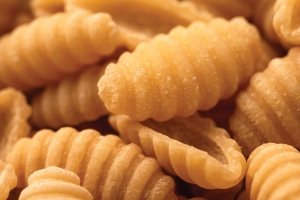
Malloreddus Pasta
The invention of dies — perhaps one of the biggest advancements in pasta-making — has given pasta another dimension. Rather than rolling and cutting each piece individually, pasta makers push the dough through dies to create ribbons, tubes and other more intricate forms. The extrusion doesn’t just shape the pasta — it also helps to develop the dough itself. Experienced pasta makers know that means being careful not to start with overmixed dough; it needs to be perfectly prepared from the beginning.
Bronze dies are the choice of most pasta chefs. “Bronze dies create the roughest surface instead of a refined and shiny one,” Palmeri says. “That rough quality allows the sauce to grip the pasta better. The dies themselves simply determine the shape, but the bronze’s value is in the texture it leaves behind. You can actually feel the roughness.”
Flour selection also plays a critical role. Many traditional dried pastas are made with durum wheat. The higher protein content in this hard grain helps the dough absorb water, develop stronger gluten and maintain its texture during cooking, producing pasta with the firm bite associated with authentic Italian preparations. Finishing the dish is equally important.
The secret ingredient to achieving a perfectly cohesive pairing between sauce and pasta is closer than most cooks may think. Incorporating a small amount of the starchy water that the pasta was boiled in helps the sauce coat the noodles and creates an effortless, silky finish.
Perhaps that’s why pasta has endured for so long. It began as a practical way to stretch limited ingredients, but generations of cooks have transformed it from a necessity into something far more complex.
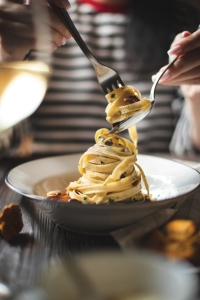 “Pasta is one of the best examples of how the simplicity of ingredients can create extraordinary experiences that unite cultures, people and generations,” de Blasio says.
Every region has adapted it to local harvests, traditions and climate. Every shape has served a purpose. Every family has a favorite recipe, carefully guarded and lovingly passed down. And after centuries of refinement, that may be the recipe that matters most.