




Welcome Back, Campers
Encouraging a return to adventure and the joy of trying something new.
Above: Kids playing in the splash pad at the Beach Club.
For most people, camp is something you age out of. It belongs to childhood summers, remembered through lanyards, skinned knees, group songs and friendships formed quickly and held intensely. Camp wasn’t just about where you were. It was about structure. Belonging. The freedom to try something new without worrying about being good at it.
For children, summer camp provides structure without feeling rigid. Days have a rhythm. Expectations are clear. Kids know what’s expected of them: show up, take part, be yourself. That consistency helps build confidence while still leaving room for creativity and independence.
“Kids thrive when they know what their day looks like but still have room to explore,” says Sandee Williams, Activities and Programming Manager at Sea Island, who oversees the resort’s Camp Cloister. “That balance is what helps them feel confident enough to try new things.”
Camp Cloister operates year-round for children ages three to fourteen, offering age-appropriate programming that mixes creative projects, games and outdoor experiences inspired by natural surroundings. Group sizes are intentionally small and organized by age, allowing counselors to tailor activities that encourage collaboration and curiosity.
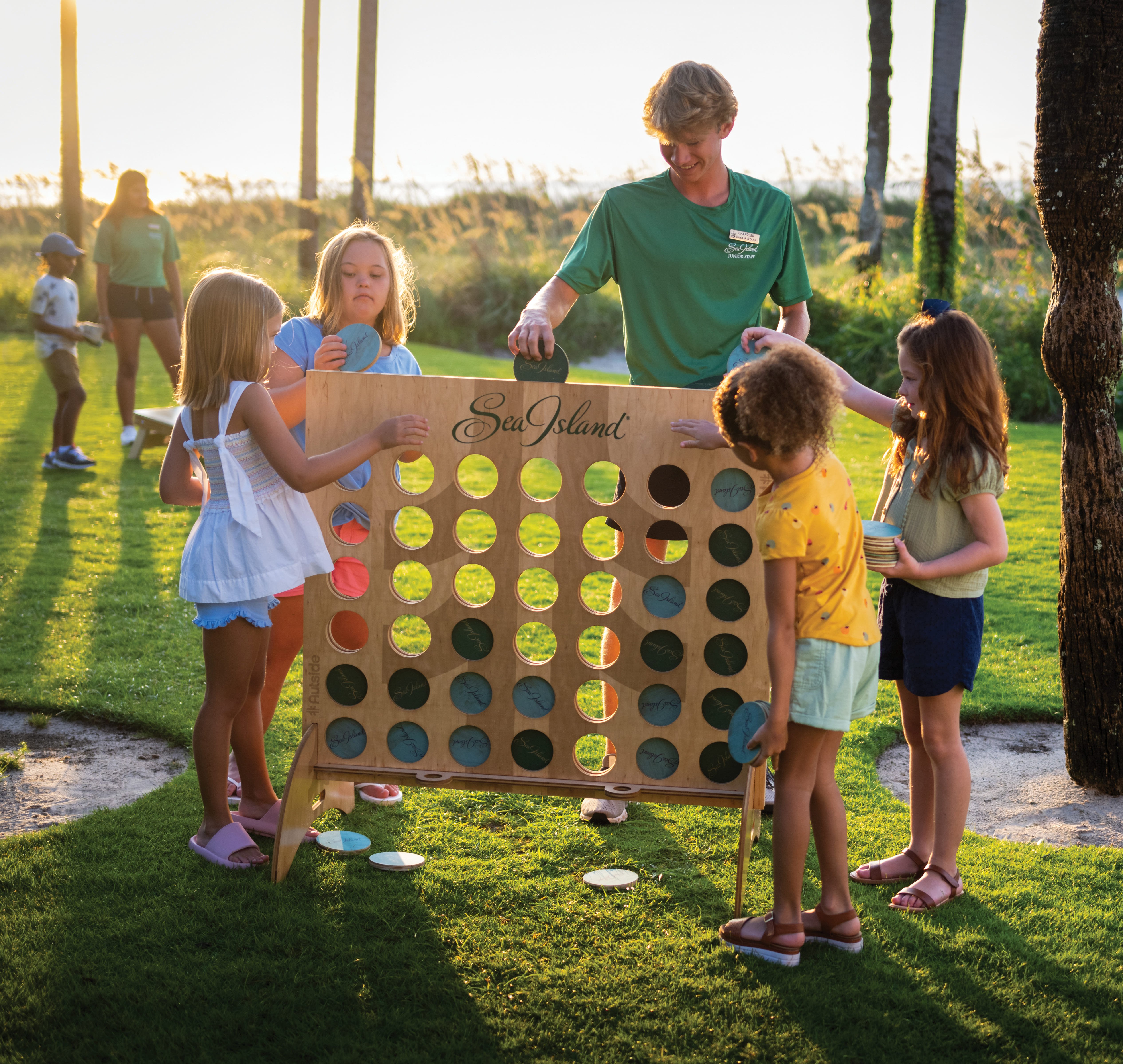
Kids Night Out at the Beach Club
“We’re not trying to rush them through tasks,” Williams explains. “We want them engaged, comfortable and proud of what they’ve done. Whether it’s picking up a new skill or making a new friend.”
Having been part of the Sea Island experience for decades, families return to Camp Cloister year after year, sometimes across generations. Parents who once spent their own summers there now bring their children back, knowing exactly what the program offers: freedom to explore within a structure that feels safe and supportive.
That’s something many adults start looking for again, too. As responsibilities change and schedules open, particularly once children head off to college, many parents find themselves with more flexibility than they’ve had in years. With that comes a familiar question: What do I want to try? What do I want to try?
CAMP EMPTY NEST
Adults are often drawn to experiences that let them test new interests without pressure. They want to try things, learn along the way and see what sticks—without signing up for a long-term commitment.
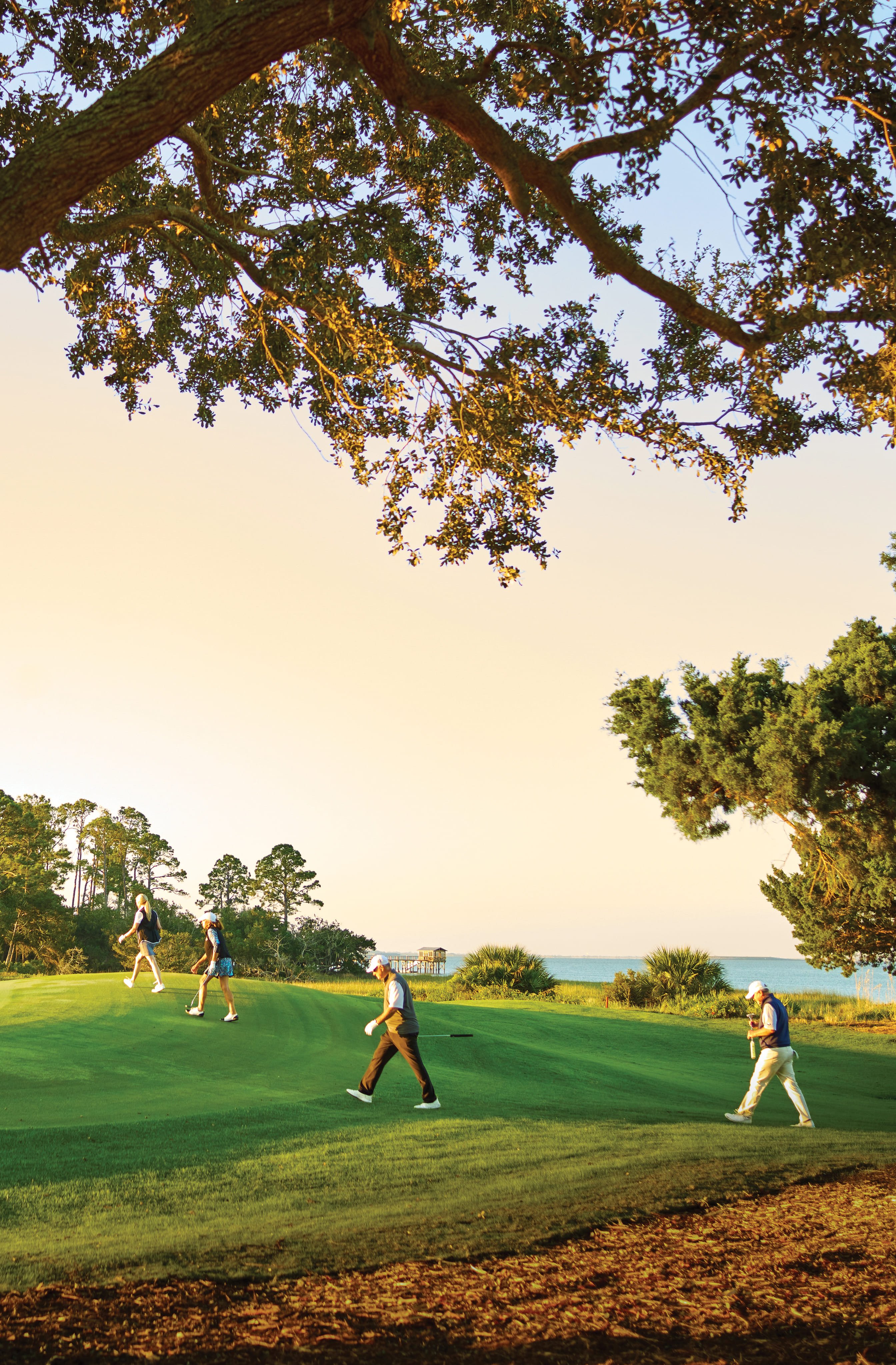
A foursome on Seaside Course No. 13.
“It’s not so different from what kids need,” Williams says. “Adults want permission to explore, too.”
At Sea Island, once children head back to school in mid-August, the resort naturally shifts. It begins to feel a little more like a summer camp for adults, whether that means signing up for a tennis or pickleball clinic, joining a guided nature experience or easing into a new fitness routine. Days can unfold with fly fishing, shooting sporting clays, riding horses, exploring watersports, diving into art and history programs or playing one of the resort’s celebrated golf courses.
Each experience is led by a professional whose expertise has been shaped over years on property—instructors, naturalists, historians and coaches who know their craft and how to introduce it to someone trying it for the first time.
“There’s no pressure to master anything,” Williams notes. “People can try something, enjoy it and move on—or discover something they want to pursue more deeply.”
At its core, summer camp, just like Sea Island, offers permission. Permission to try something without committing to it. Permission to be curious without needing to be perfect. Permission to spend time doing what genuinely interests you. For children, that kind of exploration is expected. Trying activities, rotating through interests and learning as they go is part of growing up. For adults, it can feel easier to set those instincts aside.
“Once people reach a certain point in life, they often feel like they’re supposed to already know what they like,” Williams says. “Sea Island flips that. It says, you’re never too old to explore something new.”